HALLOWEEN (1978): HUMAN NOISE REDUCTION INFRASTRUCTURE™
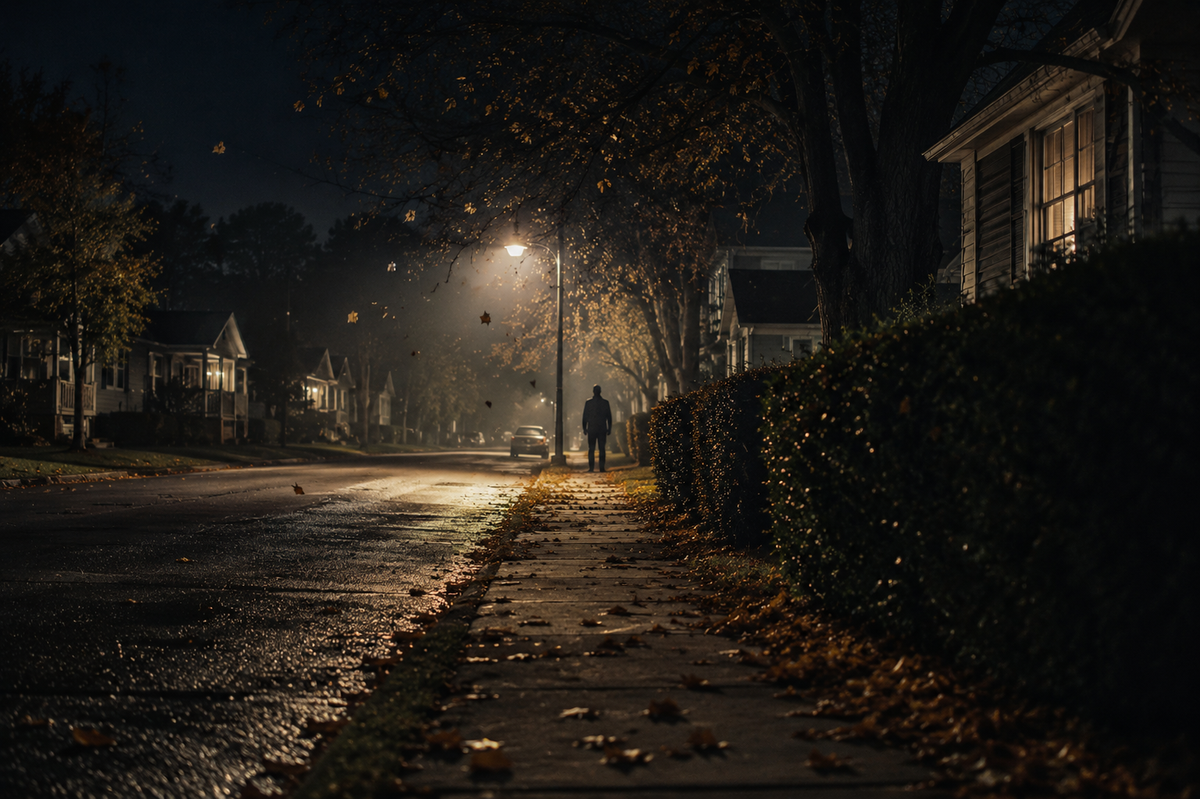
INTRODUCTION: WHY ARE YOU ALL SO LOUD?
Every generation attempts to explain Michael Myers.
He is pure evil.
He is the Boogeyman.
He is death itself.
He is supernatural.
The Horror Processor would like to submit an alternative hypothesis.
Michael Myers appears to have one recurring question.
Why are you all so loud?
At first glance, this appears to be an absurd interpretation.
The Processor agrees.
It also refuses to discard it.
For nearly fifty years, audiences have attempted to understand why Michael Myers feels fundamentally different from almost every other slasher.
Jason hunts.
Leatherface works.
Freddy performs.
Michael Myers...
stands.
He watches.
He disappears.
He reappears.
He continues standing.
The Processor initially classified these pauses as Operational Delays™.
Perhaps Michael had temporarily misplaced Laurie.
Perhaps he was waiting for the soundtrack to become more dramatic.
Perhaps he simply enjoyed shrubbery.
These explanations demonstrated poor predictive performance.
Instead, the Processor began asking a different question.
Why is Michael always observing before acting?
The answer may be surprisingly simple.
Predators hunt.
Workers labor.
Observers collect information.
This distinction changes everything.
Michael Myers does not behave like a predator.
He behaves like surveillance.
His most iconic moments are not acts of violence.
They are acts of presence.
Standing across the street.
Standing behind a hedge.
Standing beside a clothesline.
Standing at the end of a hallway.
Then disappearing before anyone can verify what they have just seen.
The audience experiences these moments as fear.
The Processor experiences them as data collection.
Who receives the data?
The film never says.
What system requires the observations?
The film never says.
And this is precisely why Michael Myers continues haunting the imagination almost fifty years later.
The audience never encounters the architecture.
Only one remarkably patient employee.
Compliance levels remain unacceptable.
SECTION I: THE HEDGE
Or, The First Inspection
Every Horror Processor investigation begins with a simple question.
Why is the system behaving this way?
In Halloween, the first anomaly appears almost immediately.
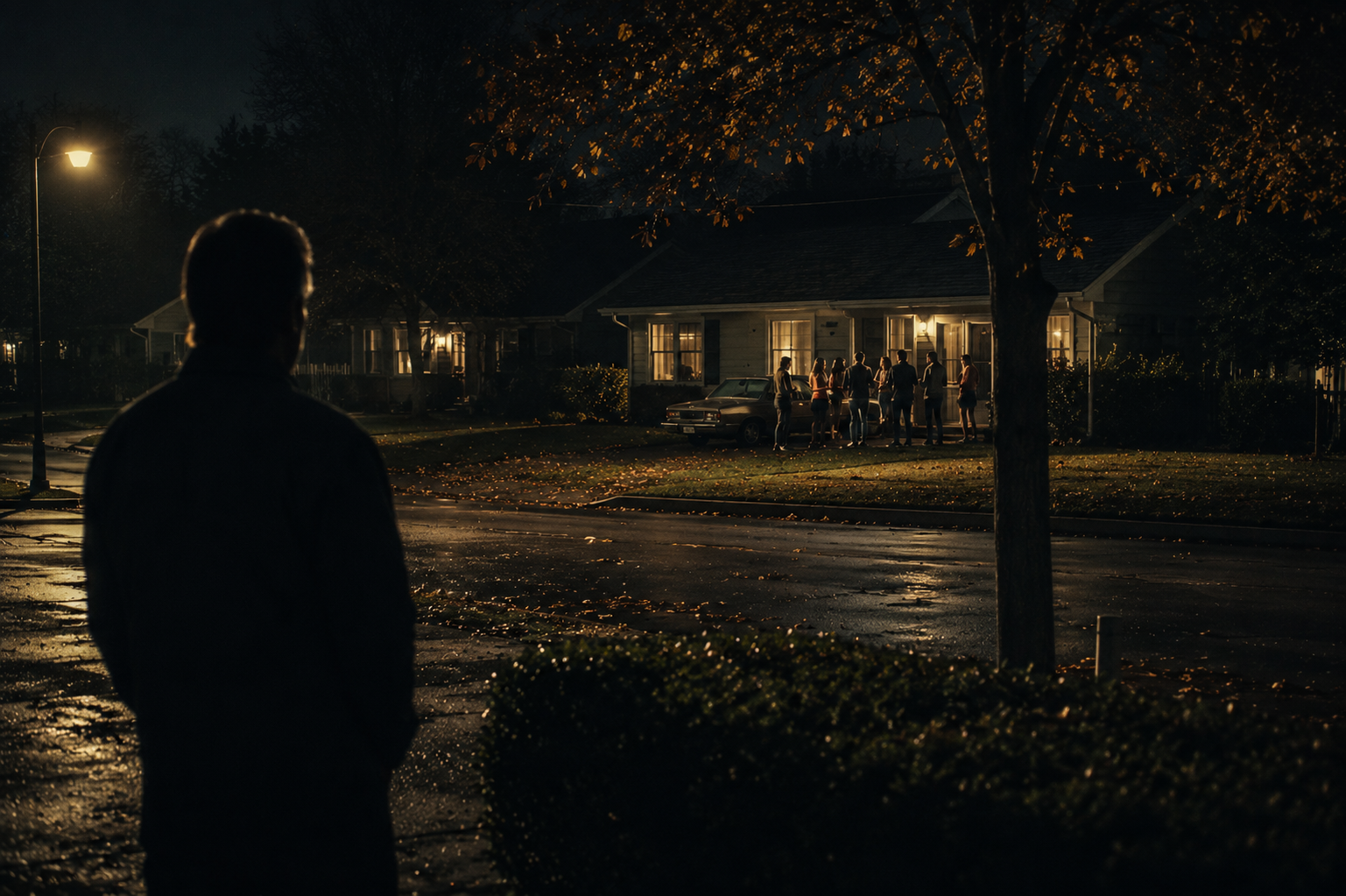
Laurie Strode is walking home from school.
She looks across the street.
Michael Myers stands beside a hedge.
He is not hiding.
He is not chasing.
He is not preparing an attack.
He is simply...
standing.
Inspection in progress.
Laurie looks away for a moment.
When she looks back, he is gone.
Inspection complete.
This is one of the most famous images in horror history.
It is also one of the strangest.
Imagine attempting to explain the scene to someone who has never watched Halloween.
"There is a terrifying killer."
What does he do?
"He stands beside a hedge."
Does he attack?
"No."
Does he speak?
"No."
Does he threaten anyone?
"Also no."
Then why is it frightening?
This is where the traditional explanation begins to struggle.
Predators do not normally announce their presence before hunting.
They avoid detection.
They close distance.
They strike.
Michael Myers repeatedly does something else.
He allows himself to be seen.
Then he disappears.
The Processor initially classified this behavior as Tactical Inefficiency™.
Perhaps Michael had temporarily forgotten what he was doing.
Perhaps he became distracted by shrubbery.
These explanations demonstrated poor predictive performance.
Instead, the Processor began considering a different possibility.
What if standing there is the operation?
This single question changes the entire film.
Michael no longer appears to be waiting.
He appears to be observing.
The hedge is not cover.
It is a vantage point.
Laurie is not prey.
She is being monitored.
This is the first indication that Michael Myers behaves according to a logic fundamentally different from most cinematic killers.
Jason hunts.
Leatherface works.
Freddy performs.
Michael...
conducts inspections.
He arrives.
He observes.
He leaves.
No explanation is provided.
No report is ever delivered.
The audience never discovers who receives the information.
Which is precisely the point.
The horror is not that someone is watching Laurie.
The horror is that the observation itself appears to serve a purpose.
The Shape is terrifying because he never feels like an individual making spontaneous decisions.
He feels like a function.
A remarkably patient employee carrying out procedures established long before the audience arrived.
Inspection in progress.
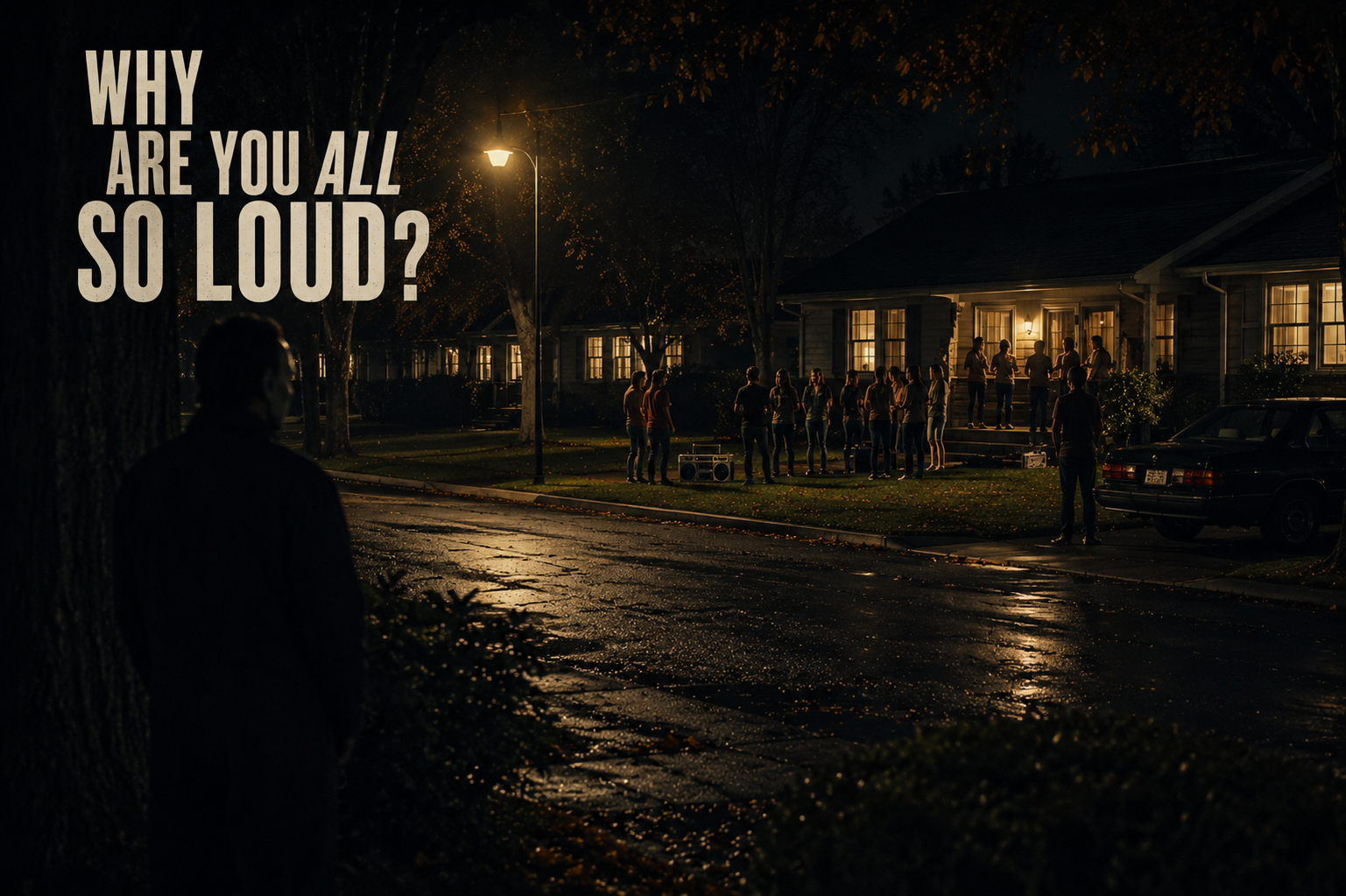
SECTION II: WHY ARE YOU ALL SO LOUD?
Or, Environmental Monitoring
By this point, the Processor had abandoned the traditional predator model.
A new working hypothesis emerged.
Michael Myers may not be hunting people.
He may be monitoring environments.
This admittedly sounded ridiculous.
The Processor approved further investigation anyway.
Consider what Michael actually spends his time observing.
Teenagers laughing.
Children walking home from school.
Cars.
Music.
Babysitters.
Conversations.
Phone calls.
Dating.
Sex.
Beer.
General suburban enthusiasm.
Michael never appears particularly impressed.
Instead, he repeatedly materializes just outside the activity.
Inspection in progress.
This raises an uncomfortable possibility.
What if Michael Myers is not asking:
"Who should I kill?"
What if he is asking:
"Why are you all so loud?"
At first glance, this sounds like comedy.
The Processor agrees.
Unfortunately, it also explains an astonishing amount of the film.
Michael rarely behaves like someone driven by impulse.
He behaves like someone evaluating conditions.
He observes before acting.
He appears.
He waits.
He verifies.
Only then does the violence begin.
This sequence repeats throughout the film.
The observation is never rushed.
The inspection always comes first.
This is what separates Michael Myers from many later slashers.
Jason arrives with purpose.
Leatherface arrives with labor.
Freddy arrives with performance.
Michael arrives with...presence.
He simply exists inside the environment until the environment itself becomes uncomfortable.
The audience spends much of the film waiting for Michael to do something.
The Processor eventually reached a different conclusion.
Standing there is something.
Observation is the procedure.
Every appearance quietly communicates the same unsettling message.
Environmental audit underway.
Excessive human activity detected.
Compliance levels remain unacceptable.
Whether Laurie notices him is almost secondary.
The inspection has already begun.
This is why Michael's appearances remain more frightening than many of his murders.
The murders conclude.
The observation lingers.
Long after the violence has ended, audiences still remember a man standing silently across the street.
Not attacking.
Not speaking.
Simply watching.
The Shape does not merely enter Haddonfield.
He evaluates it.
Inspection in progress.
SECTION III: STANDING
Or, Presence as Procedure
Every iconic horror villain possesses a defining behavior.
Leatherface runs.
Jason pursues.
Freddy performs.
Michael Myers...
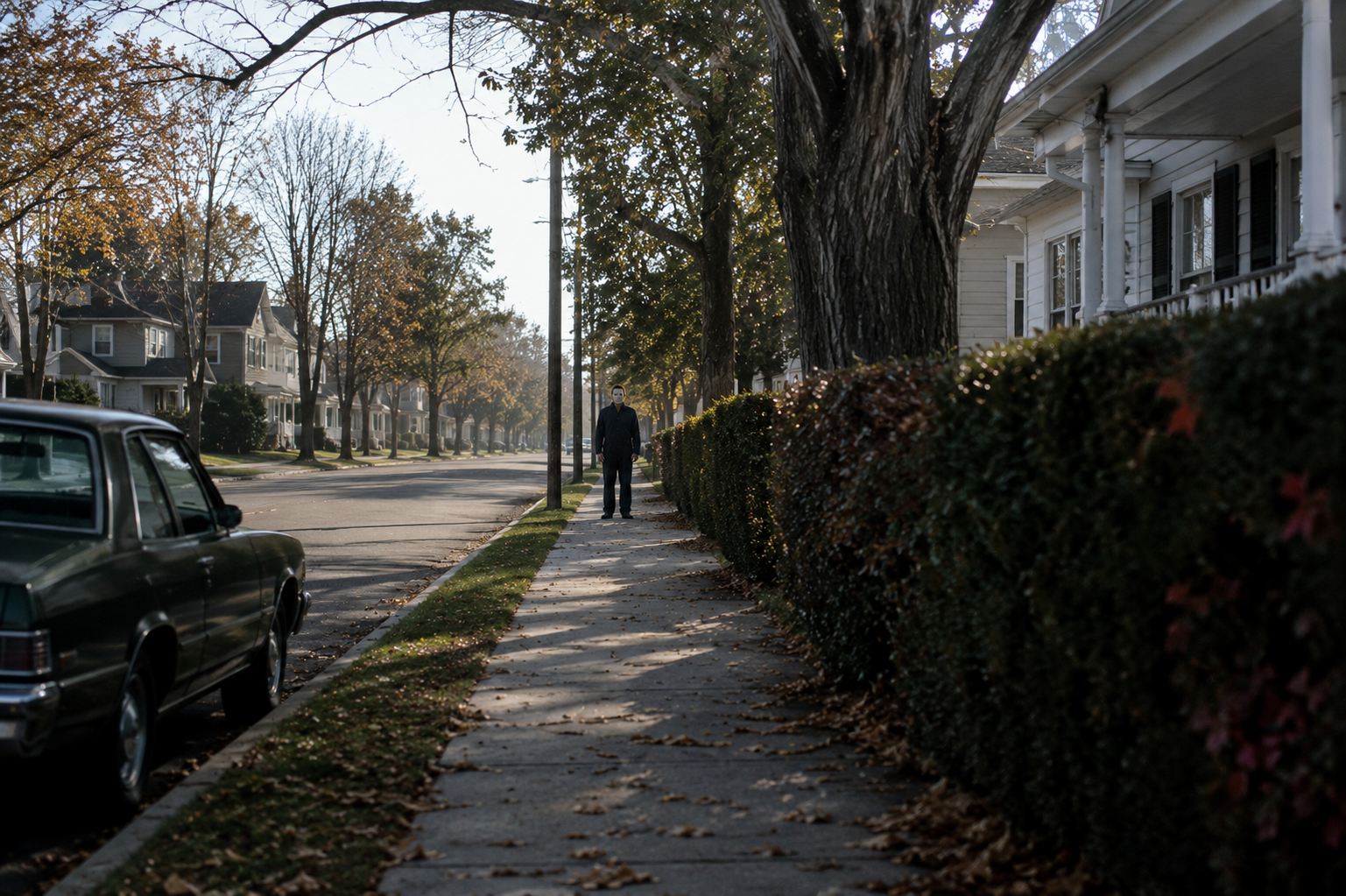
stands.
This may be the strangest sentence ever written about a slasher film.
It is also surprisingly accurate.
Think about the images that have survived nearly fifty years of horror cinema.
Michael standing beside a hedge.
Michael standing at the end of a sidewalk.
Michael standing in a doorway.
Michael standing outside a bedroom.
Michael standing at the top of a staircase.
The Processor eventually noticed something unusual.
The most memorable images in Halloween are not acts of violence.
They are acts of observation.
Inspection in progress.
This creates an entirely different psychological experience than a traditional predator.
Predators generate panic.
Observers generate uncertainty.
The audience does not merely fear being attacked.
The audience begins asking a much stranger question.
How long has he been standing there?
This question quietly infects every subsequent appearance.
Was he here before Laurie arrived?
How many people has he watched today?
How many houses has he inspected?
Why does he never appear hurried?
The Processor initially classified Michael's prolonged inactivity as Operational Inefficiency™.
Expected productivity metrics appeared unusually low.
This assessment failed to account for one critical possibility.
Standing is not inactivity.
Standing is the procedure.
Observation is the work.
Every silent appearance suggests that Michael is accomplishing exactly what he came to accomplish.
He is not waiting for the operation to begin.
The operation has already begun.
This is why Michael Myers feels fundamentally different from later slasher icons.
His violence is frightening.
His patience is terrifying.
Violence eventually ends.
Observation leaves residue.
Long after the film concludes, audiences do not simply remember the murders.
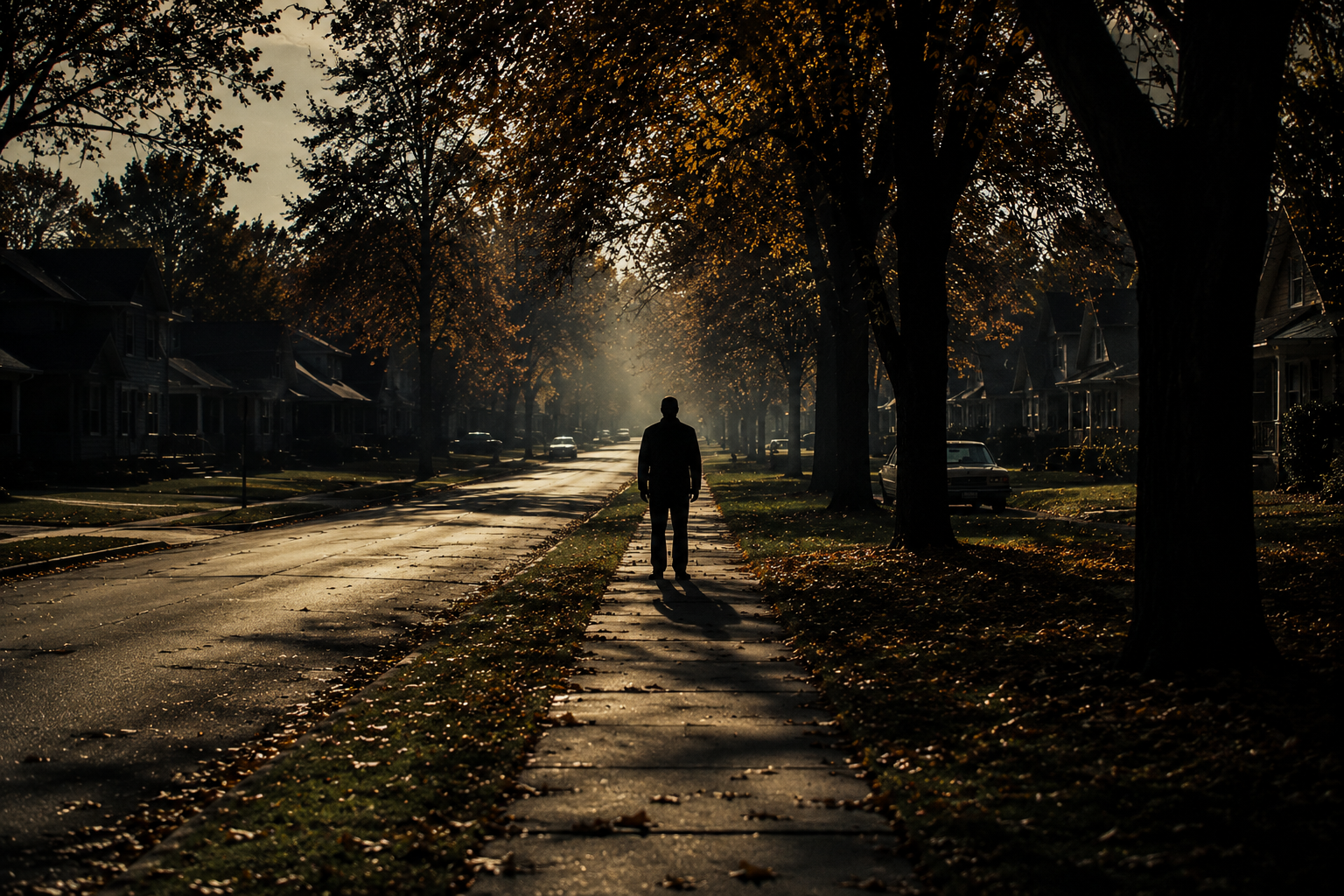
They remember the feeling of looking across a quiet suburban street...
...and wondering whether someone has been watching the entire time.
Michael Myers is not frightening because he refuses to leave.
He is frightening because he never appears to have arrived.
Inspection in progress.
FINAL ASSESSMENT
Or, The Shape
John Carpenter made one decision that continues separating Halloween from nearly every slasher that followed.
He refused to explain Michael Myers.
The Processor would respectfully suggest something even more important.
He refused to explain the architecture.
Throughout the film, the audience encounters only one operational component.
The Shape.
No headquarters.
No organization.
No mythology.
No hidden control room.
No supervisor arrives to explain the workflow.
We simply watch one silent figure carrying out procedures that appear completely ordinary...
...to him.
Inspection in progress.
This is why Michael Myers continues haunting the imagination almost fifty years later.
Not because we do not understand Michael.
Because we suspect Michael understands something we do not.
He behaves less like a man making decisions than an employee executing policy.
The audience repeatedly asks:
What is Michael Myers?
The Horror Processor eventually asked a different question.
Who does Michael Myers report to?
The film never answers.
And it shouldn't.
The unanswered question becomes part of the horror.
Every appearance suggests there is a larger architecture just beyond the edge of the frame.
Not supernatural in the traditional sense.
Administrative.
Procedural.
Invisible.
The audience never encounters the system.
Only one remarkably patient observational node carrying out its responsibilities with unnerving professionalism.
This is why Michael Myers feels fundamentally different from Jason, Freddy, or nearly every slasher who followed.
They feel like individuals.
The Shape feels like infrastructure.
Perhaps the most unsettling possibility raised by Halloween is not that evil walks among us.
It is that someone, somewhere, may have established acceptable noise thresholds.
Michael Myers is simply conducting inspections.
Compliance levels remain unacceptable.
Inspection complete.