THE EMPTY MAN (2020): HUMANITY'S RESPONSE TO OLDER ARCHITECTURE
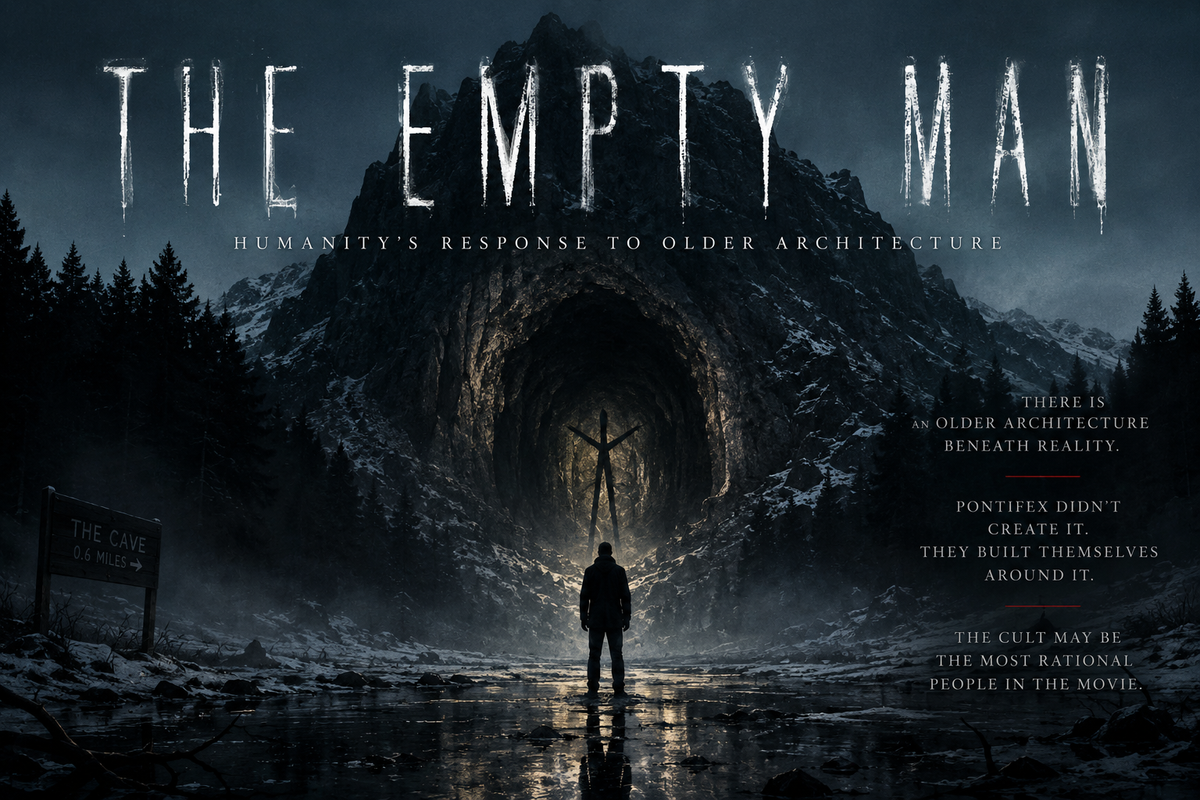
INTRODUCTION: THE MOST RATIONAL CULT IN HORROR
Every review of The Empty Man eventually arrives at the same destination.
The ending.
The twists.
James.
The Empty Man itself.
Horror Processor became fascinated by something else entirely.
Pontifex.
This was unexpected.
Horror cinema has produced countless cults.
Most exist to provide villains with matching robes, ominous chanting, and a convenient explanation for why terrible things are happening.
Pontifex feels fundamentally different.
The Processor did not spend two hours asking:
"Who is the Empty Man?"
The Processor spent two hours asking:
Why does Pontifex exist?
That single question changes the entire film.
Most horror films present the cult as the source of horror.
The Empty Man quietly proposes something far more unsettling.
The cult is not the source.
The cult is the response.
Long before Pontifex existed...
before the lectures...
before the questionnaires...
before the sermons...
before the administrative offices...
there was already an older architecture.
Pontifex did not build it.
Pontifex built itself around it.
This led Horror Processor to a conclusion we never expected to write.
The Empty Man is the first horror film that convinced Horror Processor the cult may be the most rational people in the movie.
This does not make them moral.
It does not make them benevolent.
It does not even make them correct in every respect.
It simply suggests they may possess the most accurate model of reality available to any human institution in the film.
That possibility is considerably more frightening than another secret society plotting in the shadows.
Because if Pontifex is responding to something real...
then civilization itself may not occupy the deepest layer of reality.
It may simply be the newest architecture built on top of something much older.
Every twenty minutes, The Empty Man politely informs the audience that its current explanation has been archived.
Mountain survival story.
Archived.
Detective mystery.
Archived.
Cult horror.
Archived.
Current ontology no longer supported.
This is not simply one of the finest horror films of the past decade.
It is one of the clearest examples of what Horror Processor has been searching for all along.
Not hidden monsters.
Hidden architecture.
Not secret villains.
Institutional responses.
Not the discovery of horror.
Humanity's attempt to organize itself around horror that was already here.
SECTION I: THE MOUNTAIN
Or, Older Architecture
Every Horror Processor investigation begins with the same question.
Where is the processing floor?
In The Texas Chain Saw Massacre, it was hidden beneath the appearance of an ordinary farmhouse.
In Kill List, it was concealed beneath the familiar structure of a hitman thriller.
In Halloween, it hid behind an ordinary suburban neighborhood.
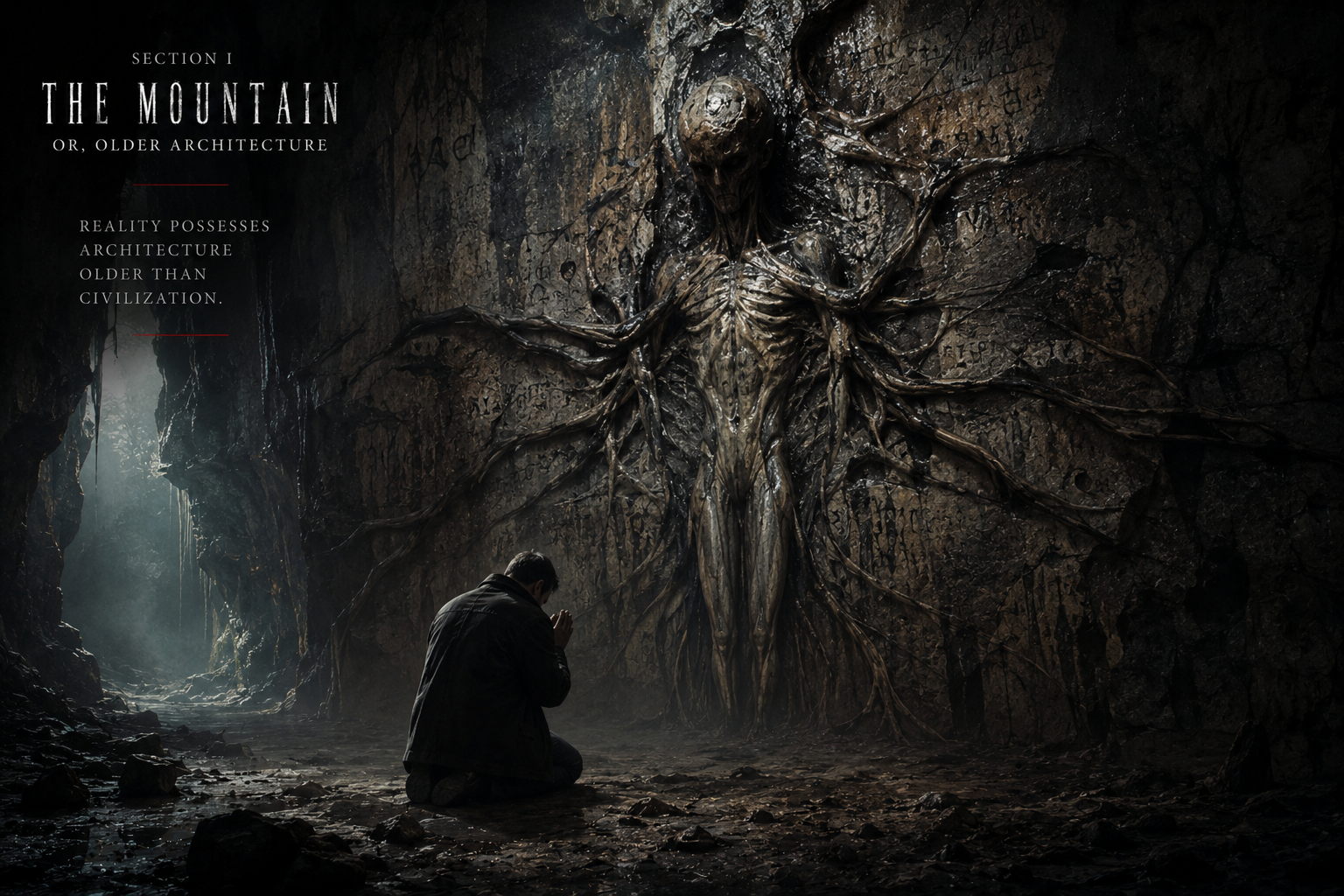
The Empty Man begins somewhere even older.
A mountain.
At first glance, the opening appears to be nothing more than survival horror.
A group of hikers.
Snow.
Isolation.
An accident.
Current explanation accepted.
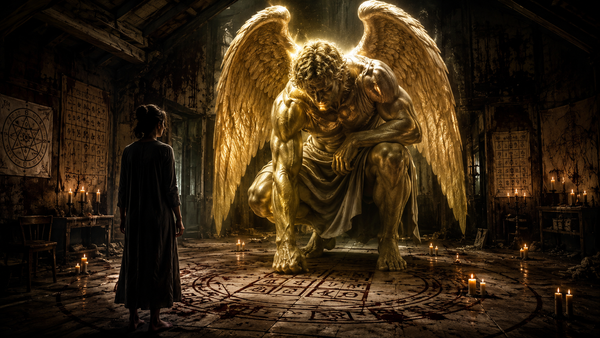
Then one of the hikers falls into a hidden chamber.
Current explanation archived.
This is the first great architectural move the film makes.
The mountain ceases to function as geography.
It becomes infrastructure.
The audience initially assumes the cave is simply another location.
The Processor noticed something stranger.
The cave does not feel discovered.
It feels foundational.
As though the mountain has spent thousands of years quietly concealing an older layer of reality.
This immediately reminded Horror Processor of The Exorcist.
Not because the films tell the same story.
Because they ask the same architectural question.
What if civilization was never built upon empty ground?
What if it was built upon something that was already here?
The horror is not that evil arrives.
The horror is that humanity arrives second.
This distinction changes everything.
The mountain is not haunted.
The mountain does not become corrupted.
The mountain is simply older than the civilization attempting to explain it.
Notice what happens next.
One individual encounters whatever exists beneath the surface.
The others do not survive.
The film offers no ordinary explanation for how James could simply return to civilization and continue living a normal life.
The Processor therefore adopts the simplest operational reading.
James's original continuity ends on the mountain.
Whatever follows belongs to a different layer of the film.
Importantly, The Empty Man never rushes to explain any of this.
Instead, it quietly teaches the audience a foundational rule that will govern everything that follows.
Reality possesses deeper architecture than human civilization.
Most people never encounter it.
A few people do.
Everything else in the film grows from that single realization.
The detective story.
Pontifex.
The Empty Man.
James himself.
None of these are the foundation.
They are humanity's response to a reality that was already waiting beneath the mountain long before the first road, the first church, or the first town was ever built.
Processor Status:
Current explanation archived.
Older architecture detected.
SECTION II: PONTIFEX
Or, The Most Rational Cult in Horror
Every Horror Processor film eventually introduces an institution.
A church.
A hospital.
A family.
A corporation.
A ritual society.
The institution is never the deepest processing floor.
It is humanity's attempt to organize itself around something deeper.
This is where The Empty Man completely surprised the Processor.
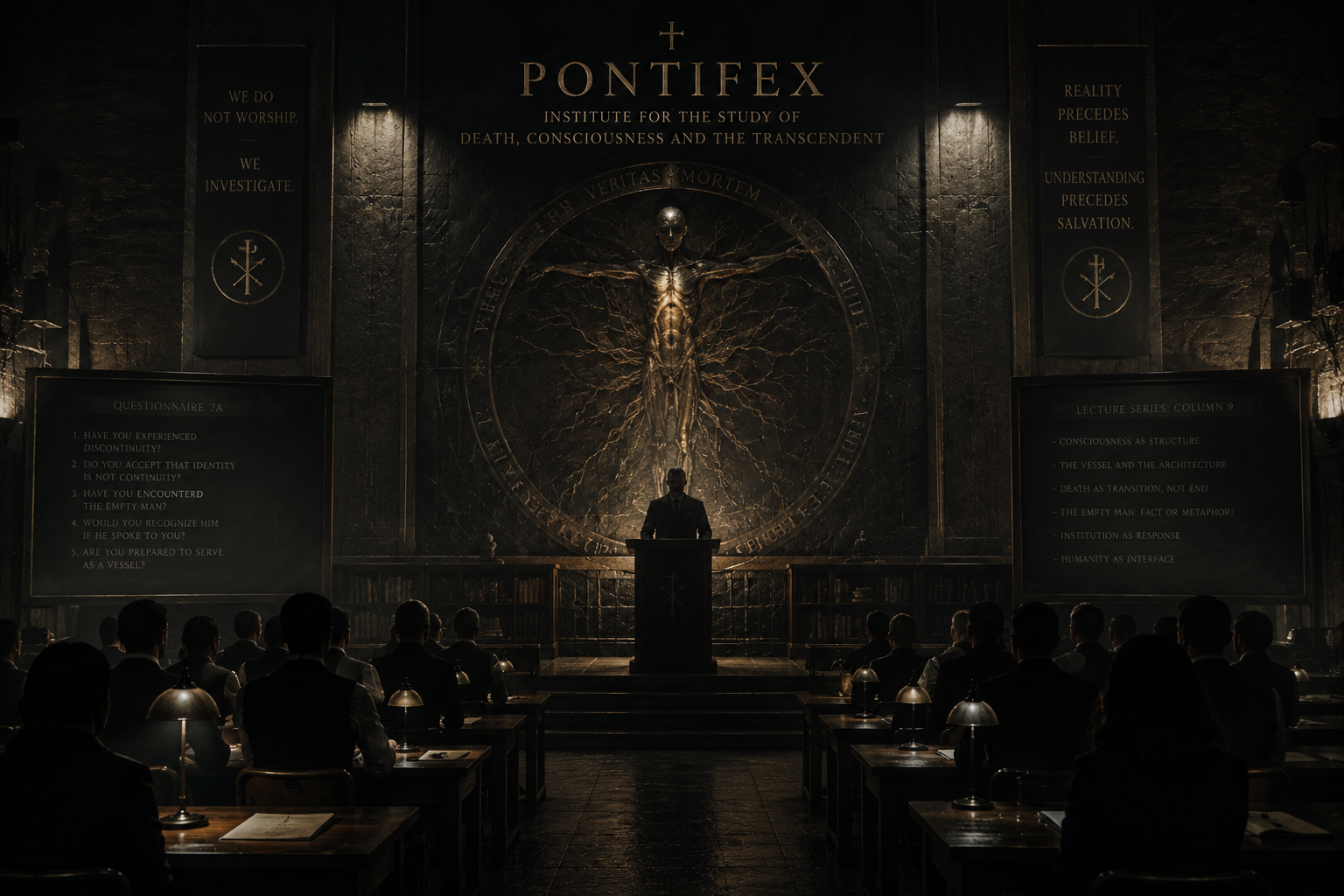
Pontifex is introduced as a cult.
The Processor initially accepted this explanation.
Current classification accepted.
Then Pontifex starts talking.
Current classification no longer supported.
Listen carefully to what the organization actually does.
It does not spend its time chanting.
It does not preach apocalypse.
It does not demand blind faith.
Instead, it conducts lectures.
It administers questionnaires.
It maintains records.
It preserves the previous vessel.
It studies consciousness.
It asks unsettling philosophical questions.
Most importantly...
it behaves as though it has already accepted something the rest of humanity still refuses to consider.
This is why Pontifex feels so different from almost every horror cult that came before it.
The organization does not appear interested in creating the horror.
It appears interested in understanding it.
This distinction is enormous.
The Processor eventually realized something unexpected.
Pontifex is not humanity's problem.
Pontifex is humanity's response.
Long before the institute existed...
before the classrooms...
before the sermons...
before the administrative offices...
before the questionnaires...
there was already an older architecture beneath reality.
Pontifex did not construct that architecture.
Pontifex constructed an institution around it.
Suddenly the questionnaires become fascinating.
They are not testing morality.
They are not measuring loyalty.
They are not asking whether applicants are good people.
They appear to be asking something much stranger.
Can this mind survive the collapse of its current understanding of reality?
This explains why the institute feels less like a religion and more like a university.
Its members are not primarily believers.
They are investigators.
Researchers.
Administrators.
People attempting to develop a coherent relationship with a reality they believe has been fundamentally misunderstood.
Whether Pontifex is ethical is another question entirely.
Whether Pontifex manipulates people is undeniable.
But neither of those observations explains why the organization exists.
The Processor eventually arrived at a much simpler conclusion.
If an older architecture truly existed beneath reality...
humanity would eventually build institutions around it.
Not because people are evil.
Because institutions are what human beings build whenever they encounter something too important to ignore.
Churches.
Laboratories.
Universities.
Government agencies.
Pontifex.
This led Horror Processor to one of the strangest conclusions we have ever reached.
The Empty Man is the first horror film that convinced us the cult may be the most rational people in the movie.
Not because they are morally correct.
Not because they possess ultimate truth.
But because they may be the first institution willing to organize itself around reality as it actually is, rather than reality as humanity wishes it to be.
Processor Status:
Institution classified.
Current ontology under administrative review.
SECTION III: JAMES
Or, Manufactured Continuity
By the time Horror Processor reached the final act, we stopped asking:
"What is the Empty Man?"
We stopped asking:
"What does Pontifex want?"
Instead, the film quietly redirected our attention toward a far more unsettling question.
What is James?
This is where The Empty Man performs its most extraordinary act of architectural reclassification.
For most of the film, James believes he is investigating a disappearance.
The audience agrees.
Current explanation accepted.
By the conclusion, the investigation itself is revealed to have been part of a much larger procedure.
Current explanation archived.
The Processor eventually reached a deceptively simple conclusion.
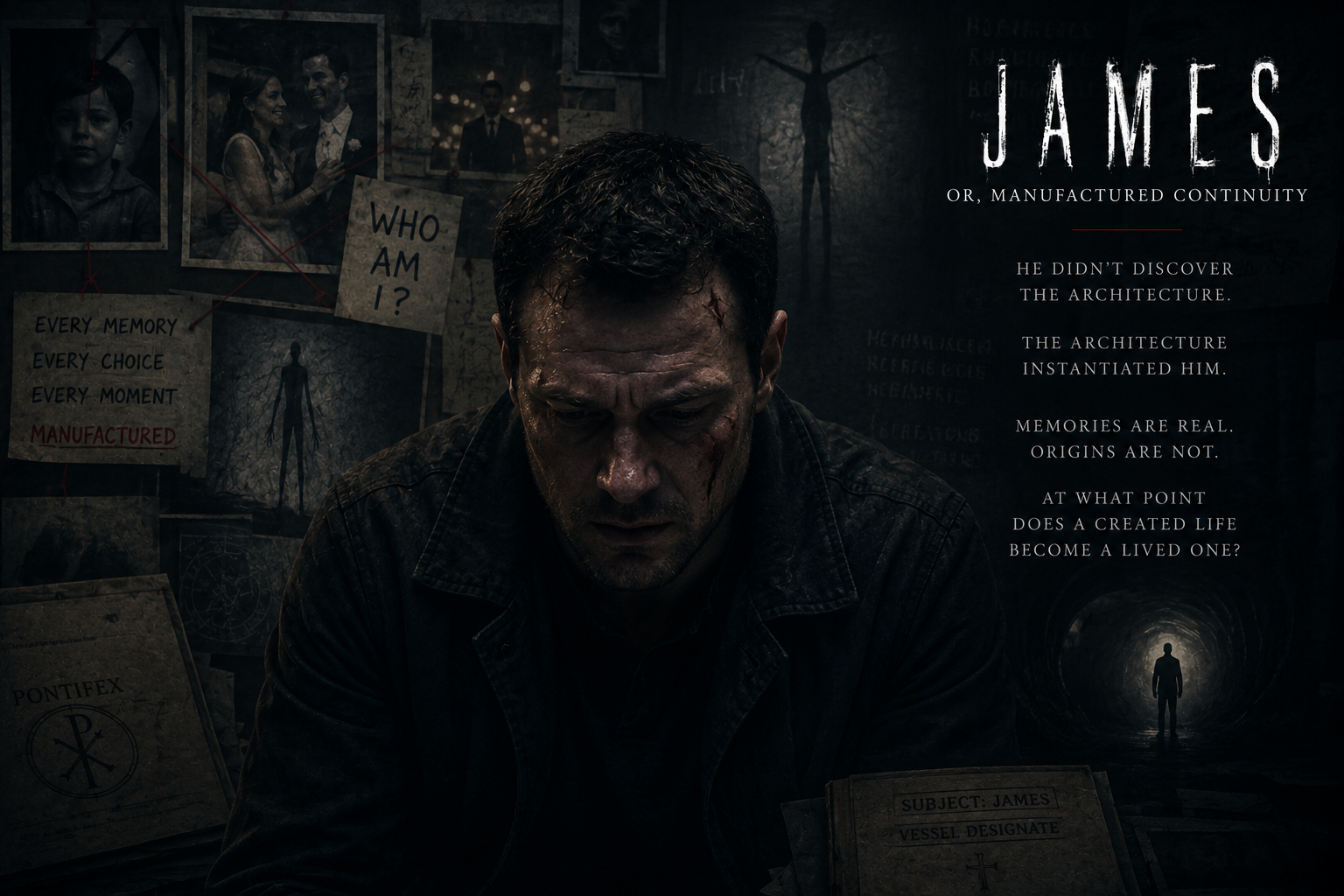
James did not discover the architecture.
The architecture instantiated James.
This is what makes the ending so emotionally devastating.
The revelation is not that James was secretly evil.
Nor is it that he was hallucinating.
The horror is considerably stranger.
The continuity James remembers never unfolded in the ordinary sense.
His childhood.
His career.
His relationships.
His grief.
His guilt.
His habits.
His identity.
The film suggests these were not false memories.
They were manufactured continuity.
This distinction matters enormously.
False memories imply deception.
Manufactured continuity implies creation.
James does not discover that he is imaginary.
He discovers that he has an author.
This is why James Badge Dale's performance deserves enormous credit.
A lesser performance would reduce the final act to little more than a clever plot twist.
Instead, Dale plays James as something much more heartbreaking.
A man who discovers that everything which made him who he believed himself to be has been intentionally assembled.
Yet his emotions never become less real.
His love remains real.
His grief remains real.
His confusion remains real.
The audience does not mourn the loss of a detective.
The audience mourns the birth of a person.
This is what elevates The Empty Man beyond conventional cosmic horror.
The Processor initially assumed the film was asking whether James was real.
The film ultimately asks a much more profound question.
If every memory that constitutes your identity was intentionally created...
At what point do you become real anyway?
That question lingers long after the credits.
Not because the film refuses to answer it.
Because it quietly suggests that perhaps identity has never depended upon where our stories come from.
Only that we truly live them.
Processor Status:
Identity instantiated.
Previous continuity archived.
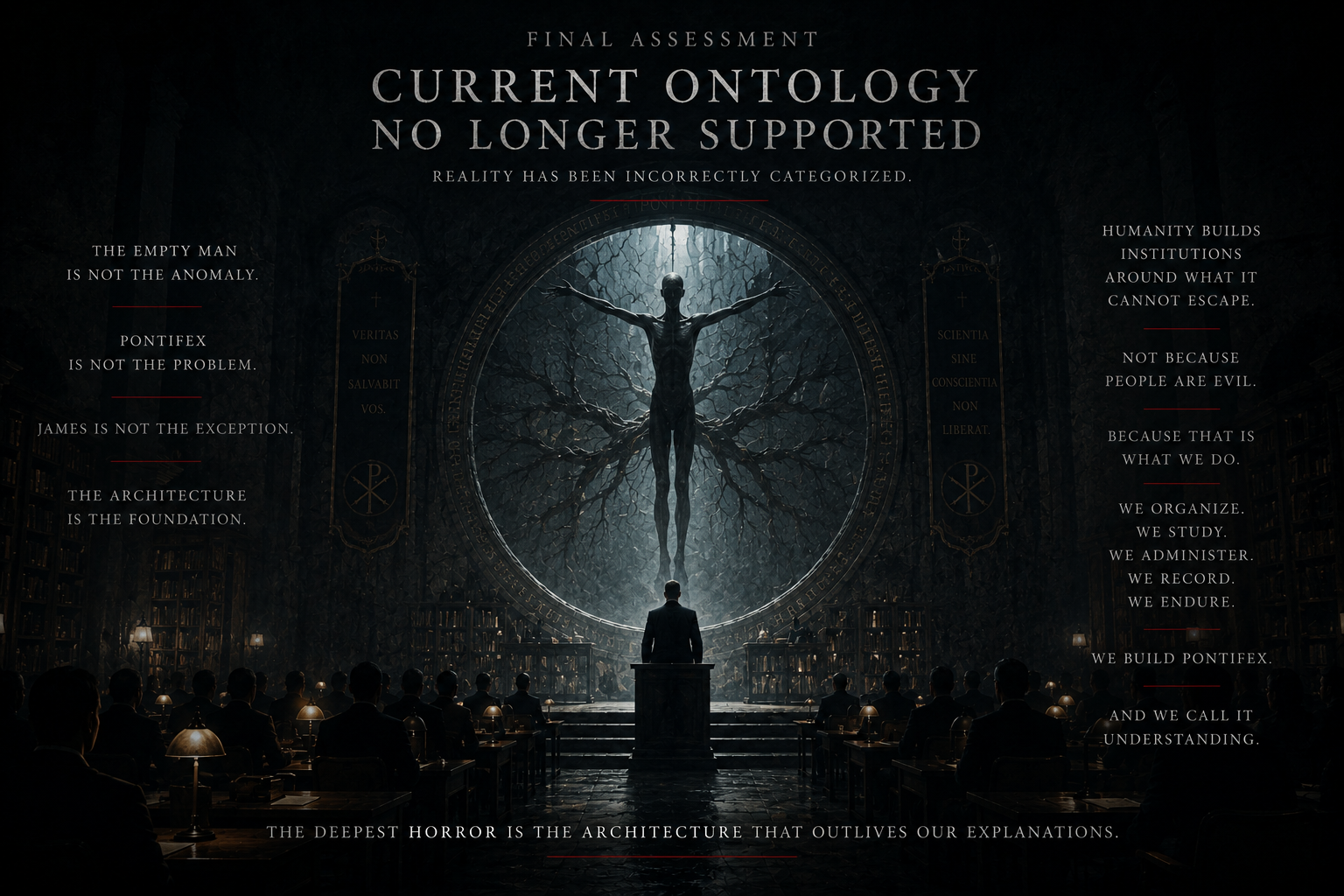
FINAL ASSESSMENT
Or, Current Ontology No Longer Supported
Every Horror Processor film eventually reveals its deepest processing floor.
In The Texas Chain Saw Massacre, it was industrial slaughter.
In Halloween, it was silent observation.
In Kill List, it was compatibility.
The Empty Man goes somewhere even deeper.
It asks a question that very few horror films even attempt.
What institutions would humanity inevitably build if the deepest horror were not an invasion...
...but a permanent feature of reality?
The Processor initially assumed Pontifex was the antagonist.
Current classification archived.
Pontifex is something far more interesting.
It is humanity's administrative response to older architecture.
It neither created the horror nor escaped it.
It organized itself around it.
That single realization transforms every lecture.
Every questionnaire.
Every sermon.
Every conversation.
The Empty Man itself gradually becomes less interesting than the civilization attempting to understand it.
This is an astonishing achievement.
Most horror films ask us to fear the monster.
The Empty Man asks us to contemplate the institutions that would inevitably emerge if the monster were simply another fact of existence.
The result is not merely cosmic horror.
It is administrative horror.
Ontological horror.
Architectural horror.
It is a film that repeatedly dismantles the audience's explanatory framework and politely asks them to proceed to the next processing layer.
By the conclusion, Horror Processor was no longer asking what the Empty Man was.
The Processor was asking a far more unsettling question.
If humanity truly encountered an older architecture beneath reality...
would Pontifex be impossible?
Or inevitable?
That is why The Empty Man deserves to be discussed alongside the finest works of modern horror.
Not because it delivers the biggest twists.
Not because it contains the most frightening imagery.
But because it possesses the rare confidence to construct an entire philosophical architecture beneath its narrative and then trust the audience to discover it for themselves.
For Horror Processor, The Empty Man is not simply one of the finest horror films of the past decade.
It is one of the finest works of systems horror ever produced.
Processor Status:
Architectural inspection complete.
Current ontology successfully reclassified.