Possession: Architecture is Never Neutral (Part 1)
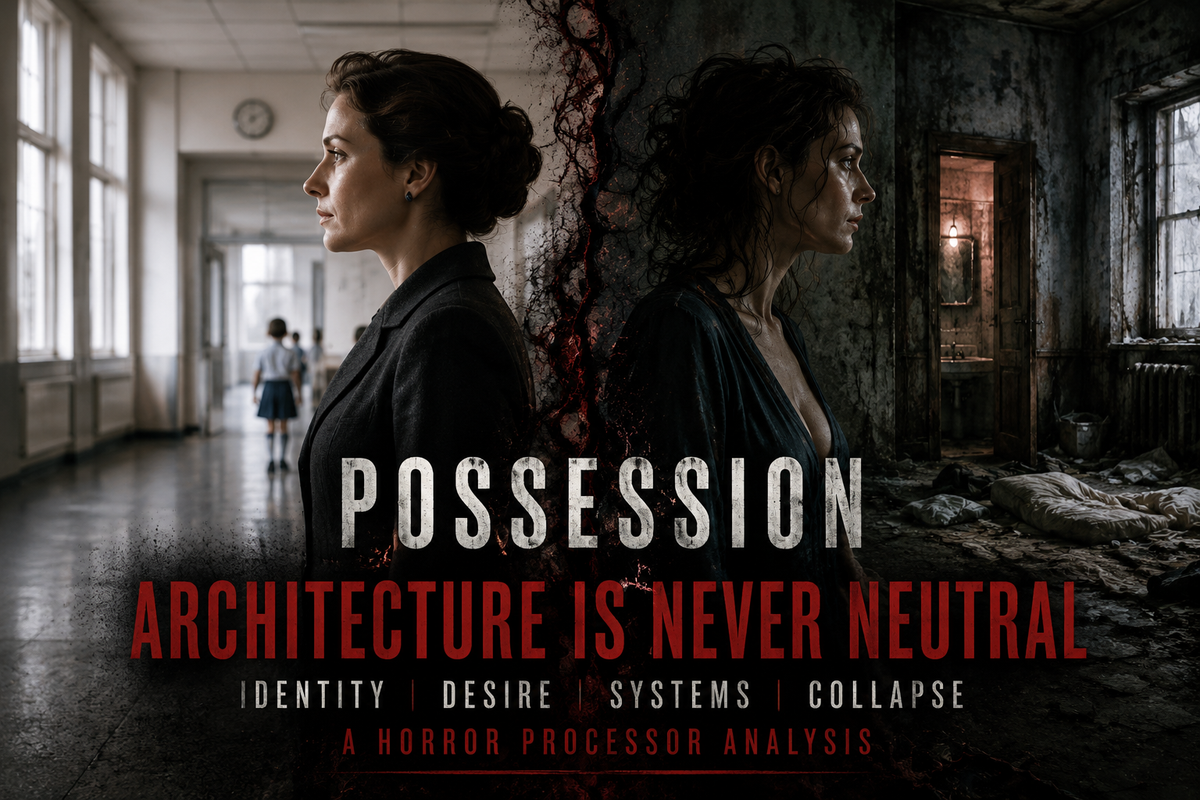
One reason Possession immediately stands apart in our Horror Processor canon is simple: our previous films, however brilliant, eventually become legible.
Texas Chain Saw Massacre? Avoid the creepy house. Leatherface is basically a shift worker who needs a cigarette, a Michelob, and ten minutes alone.
A Nightmare on Elm Street? Sleep remains inadvisable. A mop may be required after the Johnny Depp arterial milkshake incident.
The Exorcist? Interpretive collapse, institutional failure—but eventually: yes, the child is clearly possessed by a demon who sounds like he spent 48 hours unloading cargo at the docks while chain-smoking unfiltered Marlboro Reds. Classification achieved. Call clergy.
But Possession?
Forty-five minutes in, our current analytical staffing is already insufficient.
This is no longer routine horror cleanup.
This is:
“Get Freud on the line.” “Also NATO.” “And someone from aerospace engineering. We may need independent organism classification.”
Because Possession is not one horror mechanism.
It is psychosexual espionage divorce body horror metaphysical systems collapse.
And we’re not even halfway through.
A Nightmare on Elm Street asked:
What if sleep became hostile territory?
Possession asks:
What if your marriage became a geopolitical nightmare?
Within seconds, Żuławski makes his intentions clear.
Shaky camera. Bleak concrete. Cold institutional architecture. German graffiti.
And your nervous system immediately says:
“Well this seems emotionally healthy.”
Because cinema has trained us well.
You do not open a film with brutalist Berlin architecture and handheld instability unless someone is about to experience catastrophic emotional collapse.
Or become romantically involved with an eldritch organism.
Or both.
And yes, some irrational corner of the brain immediately whispers:
“Nothing dark happens in Germany, Karen.”
Which is exactly why the opening works.
Before a single relationship dynamic is explained, Possession tells us something essential:
This is not a stable emotional world. This is hostile architecture.
Then the film drops us straight into interpretive failure.
Mark arrives.
Adults are already emotionally imploding.
No context. No explanation. No stable footing.
Classic Horror Processor move:
drop the viewer into an already-failed system.
We are not shown breakdown.
We arrive after it.
Then comes the most darkly adult exchange imaginable:
“What is wrong?” “I don’t know.” “Okay. I’ll take our son to the zoo.”
Translation:
Our marriage may be undergoing catastrophic collapse. Communication has failed. Emotional reality is fragmenting.
Lions?
Perfect.
And yes, we must acknowledge an operational factor:
Isabelle Adjani is almost offensively beautiful in this film.
Not casually attractive.
Destabilizing.
The kind of beauty that creates its own interpretive interference.
You immediately understand why Mark is obsessed.
You also understand why that obsession will be dangerous.
Because Possession is not introducing a troubled marriage.
It is introducing a failed architecture.
Even identity feels unstable.
Where are these people from?
Why Berlin?
What exactly does Mark do?
Why does everyone already behave like they’re midway through a nervous breakdown?
Nothing locks cleanly into place.
Which matters.
Because interpretive instability begins long before the supernatural arrives.
This is not domestic dysfunction.
This is reality already losing classification.
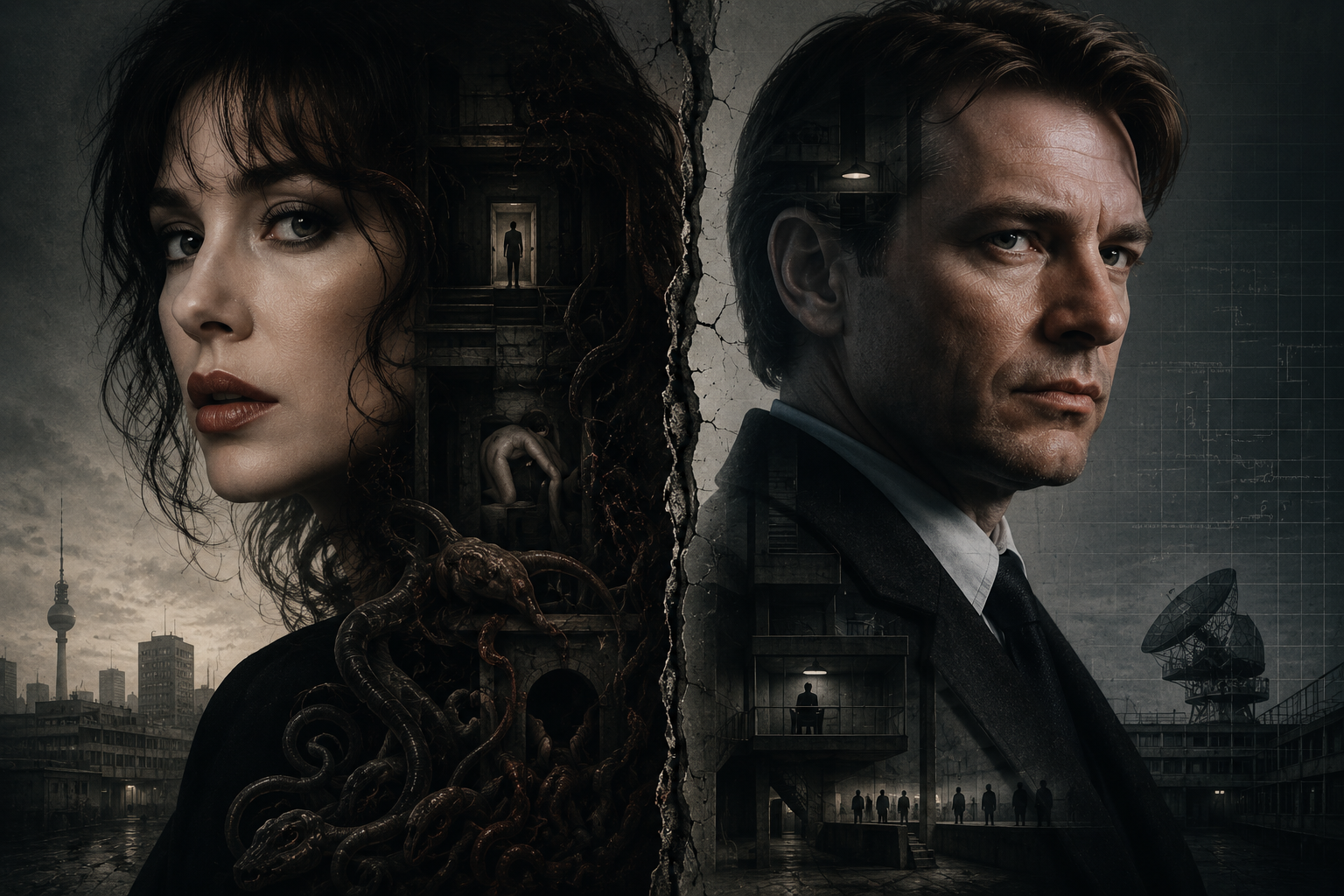
PART I — BEAUTY AS HOSTILE ARCHITECTURE
One of Possession’s cruelest insights is that architecture is not limited to buildings.
People are architectures.
Facades are architectures.
Desire is architecture.
And some structures are designed less to shelter than to entrap.
Which brings us to the objectively destabilizing reality of Isabelle Adjani in this film.
Let us be clinically honest.
This is not ordinary movie-star attractiveness.
This is psychologically disruptive beauty.
The kind that temporarily causes rational cognition to step outside for a cigarette.
Żuławski understands this perfectly.
Anna’s beauty is not incidental casting.
It is operational design.
Because if Anna were merely cold, evasive, emotionally unavailable, and inexplicable, the rational response would be straightforward:
Mark, brother. Leave.
Recover.
Preserve what remains of your nervous system.
But Possession introduces a strategic complication:
Anna looks less like an ordinary spouse and more like an apparition.
Haunting.
Luminous.
Unreadable.
Almost unreal.
And that changes everything.
Because the architecture does not trap Mark through force.
It traps him through desire.
That distinction matters.
We all arrive assuming the title refers to demonic possession.
Fair enough.
Genre shorthand.
But Żuławski quickly suggests something much nastier.
What if possession means obsession?
The desperate human urge to keep what cannot be held.
To understand what refuses explanation.
To psychologically cage what is already leaving.
And here the film becomes ruthlessly honest about human vulnerability.
Imagine sitting across from Isabelle Adjani in 1981.
Some ancient irrational subsystem of the human brain immediately files the request:
“Yes, hello. Can I have this forever, please?”
Which is, of course, exactly how terrible decisions begin.
Because the more powerfully we desire something, the less clearly we interpret it.
Beauty becomes operational leverage.
Desire becomes interpretive sabotage.
That is pure Horror Processor territory.
And Mark is the perfect victim because he is himself an architecture.
Look at him.
Immaculately dressed.
Controlled.
Lean.
Composed.
International man-of-mystery energy.
A man whose entire identity appears built around order, secrecy, and self-containment.
His professional life literally unfolds inside hidden bureaucratic architectures.
Mark presents as a functioning system.
Anna is the breach.
And what makes the horror effective is not simply that she betrays him.
It is that she bypasses his architecture entirely.
She destabilizes the system from within.
Which means Possession is not fundamentally about marital collapse.
It is about hostile reclassification.
A man who believes himself structurally coherent discovers he is catastrophically vulnerable to desire.
The architecture does not merely trap him.
It seduces him.
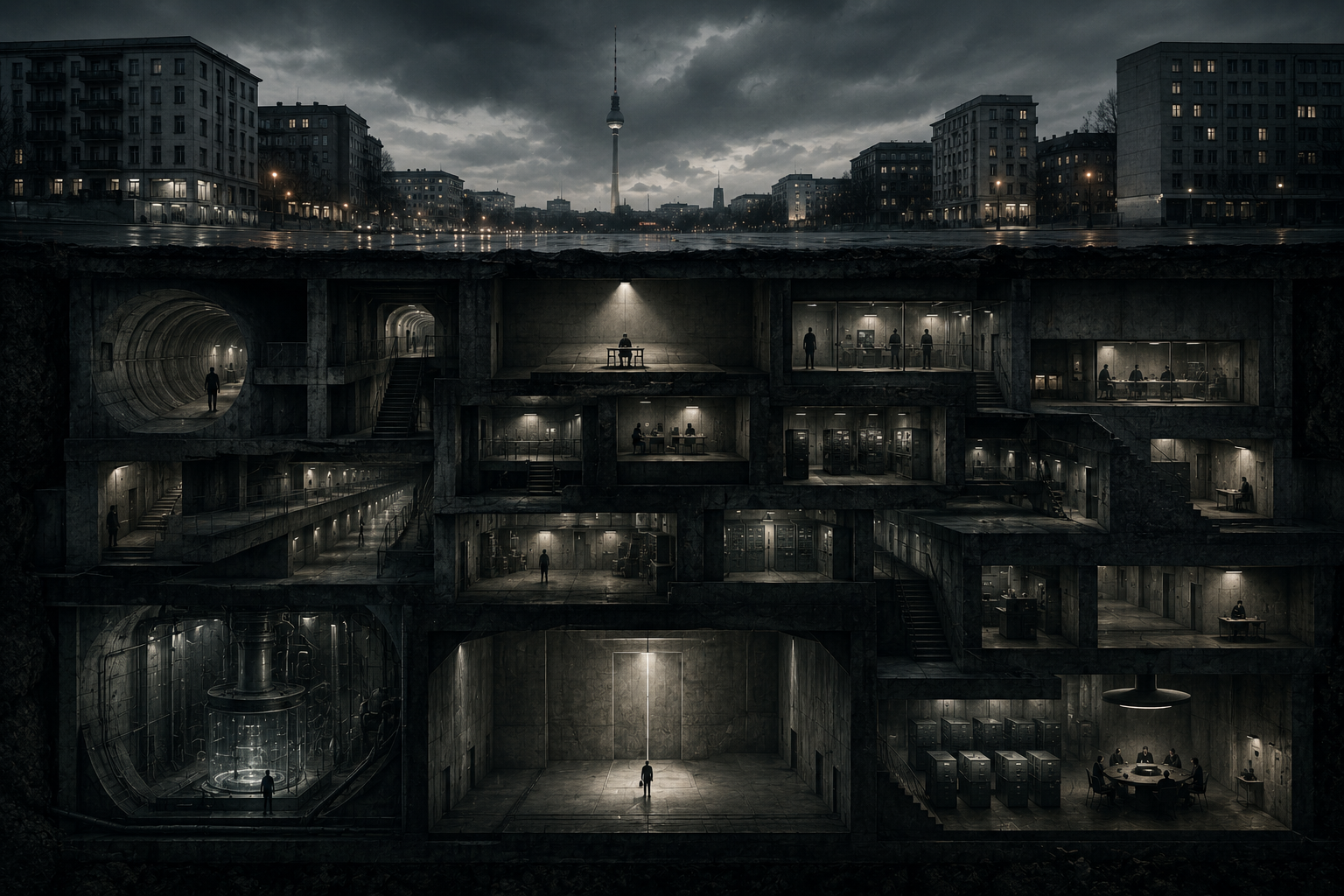
MARK ALREADY LIVES BELOW THE SURFACE
One of Possession’s smartest moves is revealing that Mark is not simply a husband experiencing marital collapse. He is already a man embedded within hidden systems.
Just as the film appears to establish itself as a psychologically volatile divorce drama, Żuławski executes a bizarre tonal pivot. Mark disappears into what can only be described as an anti-office: a vast, sterile concrete chamber that feels less like a workplace than an interrogation bunker designed by people who considered chairs an unnecessary concession to human comfort.
The dialogue is equally destabilizing.
Cold questions.
Minimal answers.
References to vials, subjects, operational details.
And then, with astonishing confidence, the film asks:
“Does our subject still wear pink socks?”
Excuse me?
This is classic Possession: introducing details that feel absurd in isolation but deeply unsettling in context.
Because suddenly Mark’s domestic collapse is framed inside something much larger:
surveillance
operational secrecy
hidden bureaucracy
subsurface institutional architecture
And the environment matters.
This is not decorative production design. It is thematic architecture.
Brutalist. Functional. Emotionally sterile.
Concrete as worldview.
The space exists not to shelter human beings, but to process them.
No softness.
No warmth.
No domestic humanity.
Just enough civilization to suggest order.
That is precisely what makes it unnerving.
Because our central thesis—architecture is never neutral—is already operating here.
Buildings communicate values.
And this one communicates:
control
containment
surveillance
human irrelevance
Even when Mark exits, the feeling persists. The exterior offers no relief. It still feels as though he has emerged from some buried administrative organ beneath the city.
Which leads to an important insight:
Mark is not descending into hidden architecture.
He already lives there.
That matters because when Possession later becomes psychologically, biologically, or metaphysically unhinged, it never feels like a clean genre rupture.
The film has already established that surface reality was unstable from the beginning.
Mark’s marriage is collapsing, yes.
But so is the architecture beneath it.
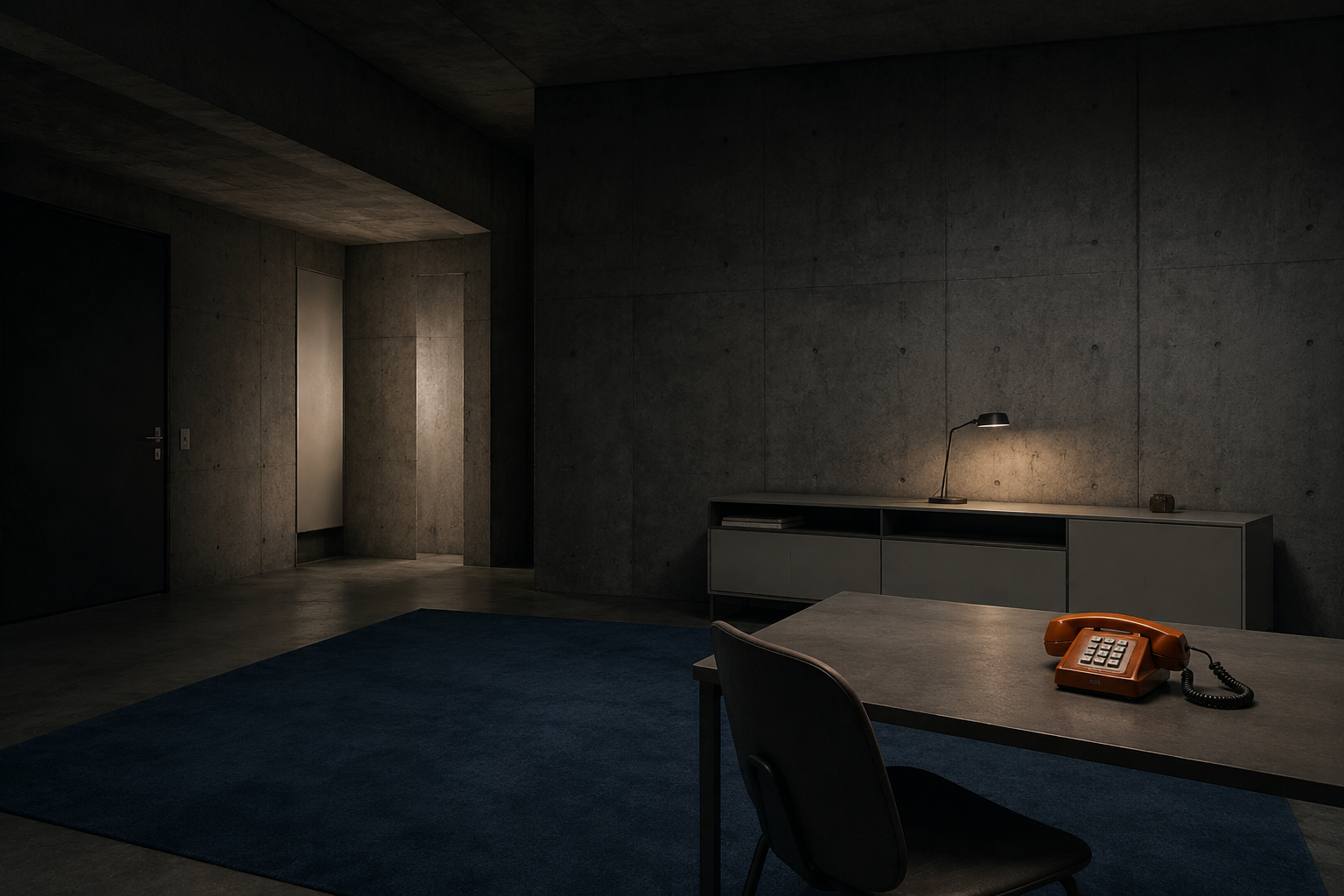
THE ORANGE PHONE OF EMOTIONAL EXECUTION
This may be one of the coldest relationship scenes in horror.
Żuławski strips away all cushioning.
No ambiguity. No euphemism. No emotional anesthesia.
Just Mark, alone in a room that feels less like a home and more like a temporary emotional holding cell.
The architecture matters.
Blue rug. Orange phone. Minimal warmth. Minimal softness.
The environment mirrors the emotional event: functional, sterile, merciless.
Then the interrogation begins.
“Do you have someone?”
“Yes.”
Internal bleeding.
“Do you sleep with him?”
“Yes.”
Critical organ failure.
“Do you like it more than with me?”
“Yes.”
Flatline.
At this point, The Naked Gun should briefly interrupt:
“Come on, Anna. Give it to me straight!”
Because the brutality becomes almost surreal.
Not melodramatic.
Clinical.
As though emotional annihilation is simply an informational transaction.
And that matters, because Possession repeatedly collapses the line between intimacy and interrogation.
Marriage here does not feel emotionally intimate.
It feels bureaucratic.
Procedural.
A hostile extraction of damaging truth.
Sam Neill plays this beautifully because Mark does not explode.
Not yet.
He absorbs.
And somehow that’s worse.
A controlled man, seated inside geometrically cold architecture, receiving the worst news of his life through an orange telephone that somehow feels actively malicious.
Even the color palette looks emotionally cruel.
And yes:
the poor bastard hadn’t even had a drink yet.
Which, given where this film goes, feels almost quaint.
But in retrospect, the scene becomes even darker.
At this point, Mark believes he is dealing with ordinary adultery.
Painful, humiliating, marriage-ending—but still recognizably human.
Which makes the later reinterpretation hysterically awful.
Retrospective version:
“Are you with him?”
“Yes.”
“Do you sleep with him?”
“Yes.”
“You prefer him?”
“Yes.”
(long pause)
“For accuracy, however… ‘him’ may not be the correct classification.”
“He’s there, though?”
“Technically yes, but I would encourage flexibility regarding taxonomy and morphology.”
That joke works because Possession weaponizes ordinary marital anxiety before revealing that the architecture is operating far outside ordinary human betrayal.
Mark thinks:
another man.
The film eventually responds:
That was adorably optimistic.
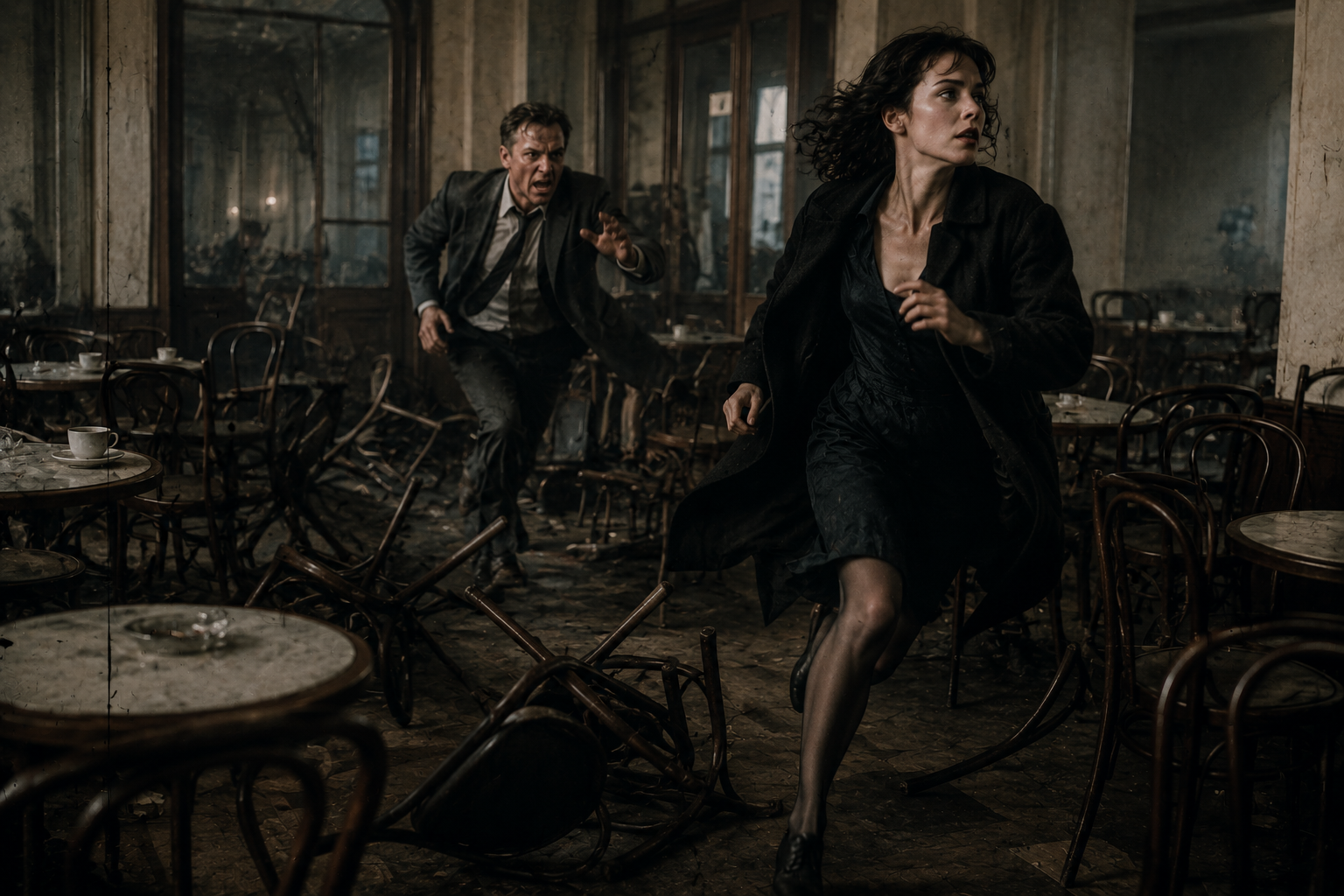
INTERPRETIVE FAILURE (WITH CHAIRS)
By the twelve-minute mark, Possession has already transformed what looks like an adultery drama into full-scale systems failure.
Mark gets confirmation:
“So you’re sleeping with him.”
“Yes.”
Devastating—but still theoretically human. Still survivable.
Then Mark drops one of the film’s most quietly terrifying lines:
“Oh, I’m inhuman. But what you’re doing is human.”
On first viewing, it reads like melodramatic cruelty.
On rewatch?
That line becomes ominously precise.
Because Mark’s behavior is entirely recognizable:
jealousy
obsession
fixation
rage
emotional destabilization
Classic catastrophic divorce behavior.
Anna’s behavior?
Classification pending.
And this is where Sam Neill’s performance becomes fascinating.
He is not playing naturalistic heartbreak.
He is performing total interpretive collapse.
This is not a man getting upset.
This is a man experiencing complete systems failure in public.
Hence the café scene.
Furniture becomes collateral damage.
Chairs begin flying.
At some point, the audience is forced to ask the only rational question:
Why are there so many chairs?
Seriously.
The café appears equipped to host a minor diplomatic summit.
Mark chasing Anna through it feels less like a marital confrontation and more like a psychotic obstacle course.
And honestly? If I had just learned my devastatingly beautiful wife preferred another partner—possibly one requiring taxonomic flexibility—and then had to navigate forty-seven aggressively placed café chairs, I too might rupture.
But here’s what matters:
the overacting is not a flaw.
It is thematic.
As ordinary emotional categories fail, emotional expression becomes grotesquely amplified.
Reality is losing proportion.
The performances follow.
And by the 45-minute mark, that collapse has become physical.
Mark deteriorates.
His posture changes.
His clothes disintegrate.
His movements destabilize.
He starts looking less like “man going through divorce” and more like:
intelligence operative experiencing acute metaphysical heroin withdrawal.
That’s the deeper horror.
Possession does not simply depict emotional breakdown.
It externalizes it.
The architecture infects the body.
ANNA AS ENVIRONMENTAL BREACH
At a certain point, Possession stops behaving like a collapsing marriage drama and starts behaving like a containment failure.
Just when Mark appears to stabilize, Anna simply reappears inside his apartment.
Not dramatically.
Not confrontationally.
She just manifests and begins casually making sausages.
Mark’s energy is essentially:
“Excuse me, can you maybe stop materializing in my domestic space and engaging in aggressive food prep?”
Anna’s energy:
“No.”
And that shift matters.
Because boundaries have fully collapsed.
Not just emotional boundaries.
Spatial boundaries.
Domestic boundaries.
Relational boundaries.
Anna no longer behaves like a spouse.
She behaves like an invasive system process.
She enters.
Reconfigures the environment.
Destabilizes everything.
Every interaction between them follows the same structure:
no escalation
no trigger
no recoverable dialogue
Just:
IMPLODE.
Which is why, at multiple points, the audience wants to intervene.
“911, what’s your emergency?”
“Yes, hello, we appear to have an active Jack Torrance developing somewhere in Europe.”
Because Mark’s deterioration has crossed from grief into full containment concern.
And what makes this terrifying is Anna’s emotional unreadability.
The self-harm scene does not emerge from recognizable human escalation.
No stable emotional logic.
No causal sequence.
Just rupture.
That’s what makes it disturbing.
Normal conflict follows patterns.
This does not.
Which brings us to one of the film’s most extraordinary images:
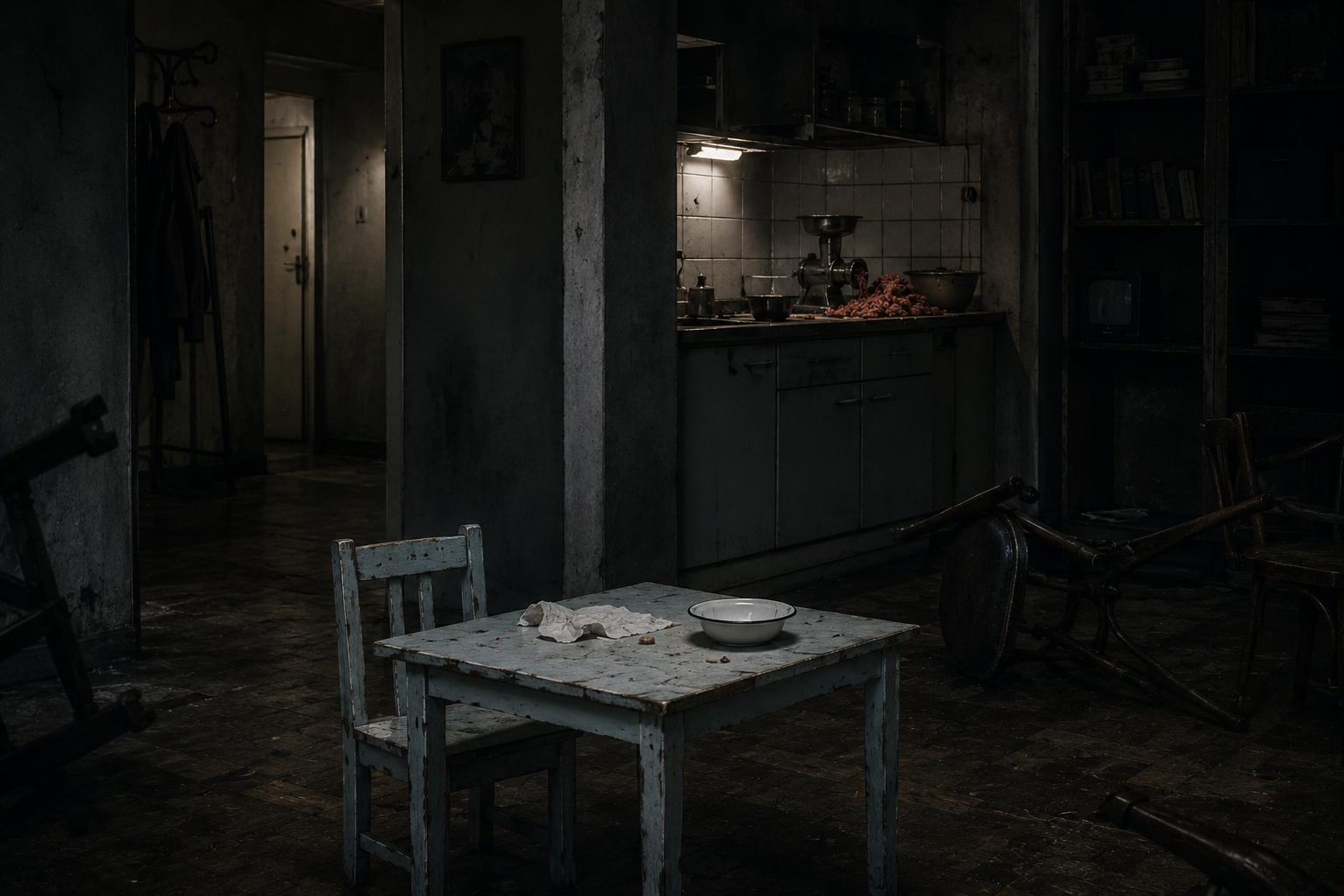
Mark, seated at a child’s table, in a child’s chair, forearm bloodied, mechanical carving knife nearby, minced meat behind him, looking like the physical remains of failed masculinity.
Then Anna enters.
Bandaged neck.
And somehow—offensively—she looks even more beautiful.
Which is where the film’s cruelest thesis fully crystallizes:
beauty as hostile architecture.
Because any rational observer should say:
RUN.
Instead Mark’s entire expression says:
“So… there’s still a version of this where we make it work?”
And that is the true horror.
Not betrayal.
Not violence.
Not psychosis.
But the fact that desire survives rational collapse.
Even after blood, knives, emotional annihilation, and obvious catastrophe, Mark still wants restoration.
That is horrifyingly human.
REPLACEMENT ARCHITECTURE
What if we’ve been classifying Possession incorrectly?
What if this is not fundamentally Anna’s infidelity?
What if the hidden system wants Mark?
And yes, we are absolutely choosing to notice that his name is Mark.
In espionage language, a mark is the target.
The selected subject.
The one being worked.
Given that Mark already operates inside hidden surveillance architecture, that reading becomes strangely persuasive.
Because from this angle, Anna’s beauty stops being incidental character design.
It becomes operational leverage.
Imagine some dark metaphysical planning meeting:
“So we want this guy?”
“Yes.”
“Problem. He appears emotionally functional.”
“Counterpoint: his wife looks like Isabelle Adjani.”
(long pause)
“Ah.”
“Exactly.”
“Weaponize that.”
Absurd?
Yes.
Weirdly convincing?
Also yes.
Because the film absolutely presents Anna’s beauty as destabilizing force—not mere attractiveness, but strategic cognitive disruption.
Ordinary desire can be negotiated.
This kind colonizes cognition.
Which makes Mark’s collapse read less like heartbreak and more like targeted dismantling.
The hidden system doesn’t need brute force.
It already has the perfect delivery mechanism:
beauty
ambiguity
hope
emotional dependency
Elegant predation.
And then the film gets nastier.
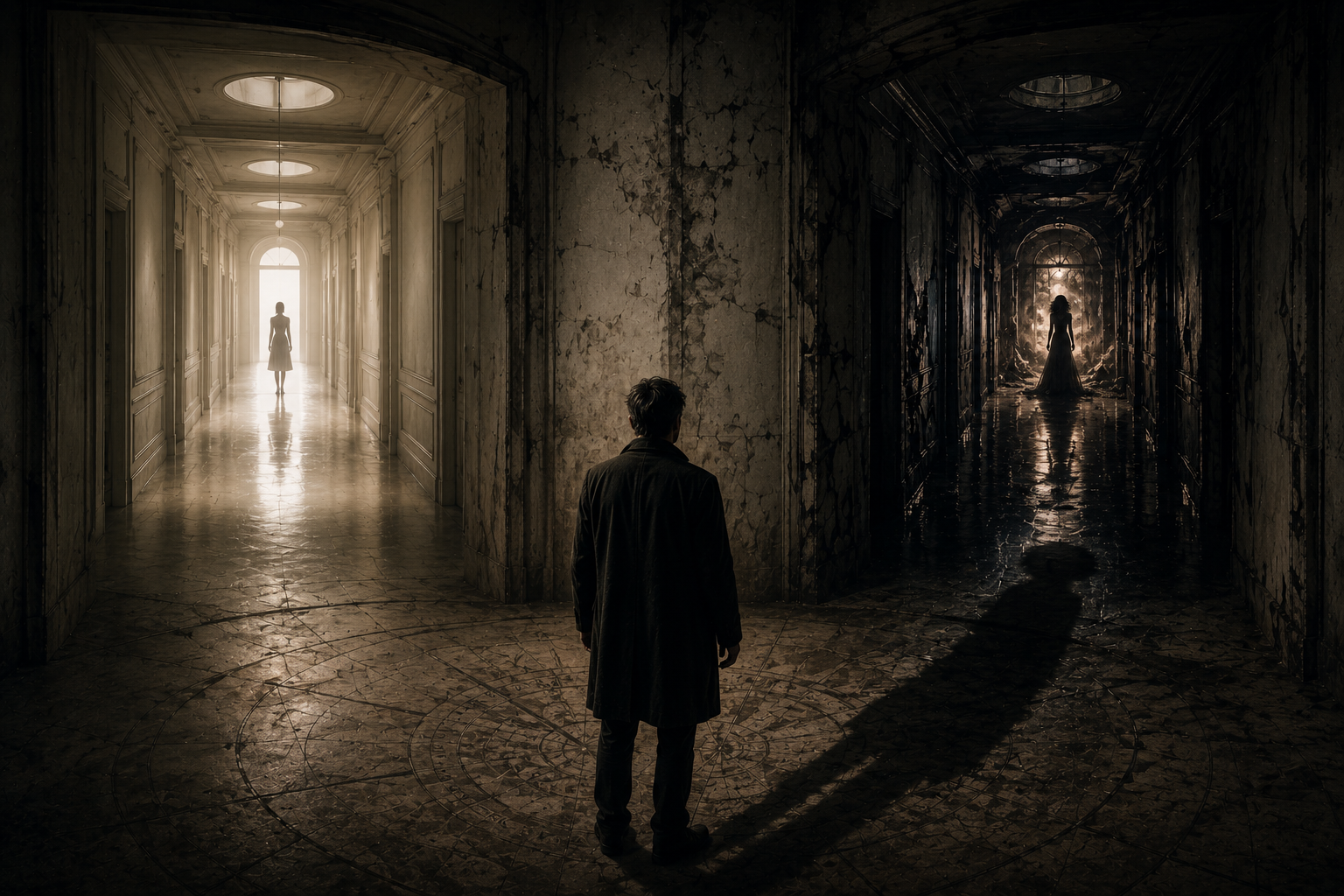
Because just as we’re processing one catastrophic Anna, Possession casually introduces another.
A calmer one.
A functioning one.
One who appears to work with children instead of participating in eldritch reproductive logistics.
Excuse me?
And the film treats this as perfectly normal.
No dramatic reveal.
No explanation.
Just:
“Yes, there are now apparently two Annas. Continue.”
This is peak Horror Processor.
Because the horror is not threat.
It’s ontological duplication.
Classification failure.
One Anna was destabilizing enough.
Now the audience immediately performs the most human possible calculation:
Stable Anna:
employed
coherent
calm
unlikely to produce an organism
Catastrophic Anna:
emotionally unreadable
spatially invasive
possibly metaphysically compromised
astonishingly beautiful
A rational analyst would construct a spreadsheet and choose Stable Anna immediately.
And yet.
Mark—and, if we’re being brutally honest, a distressing percentage of humanity—looks at both options and somehow concludes:
“Yes. Catastrophic Anna remains the preferred configuration.”
Why?
Because Possession understands something cruelly human:
Stable Anna offers clarity.
Catastrophic Anna offers intensity.
And human beings routinely confuse those categories.
That’s the deeper horror.
The architecture does not trap Mark through logic.
It traps him through intermittent hope.
THE NEW BOYFRIEND
At some point, Possession abandons metaphorical subtlety and simply says:
Yes, there is now an actual eldritch organism in the apartment.
And somehow, by this stage, the audience response is less:
WHAT THE ACTUAL FUCK
and more:
“…honestly, this tracks.”
Which is remarkable.
Because the detective sequence is objectively absurd.
This may be the least effective private investigator in cinema—a man so catastrophically awkward he makes Police Squad look like Mossad.
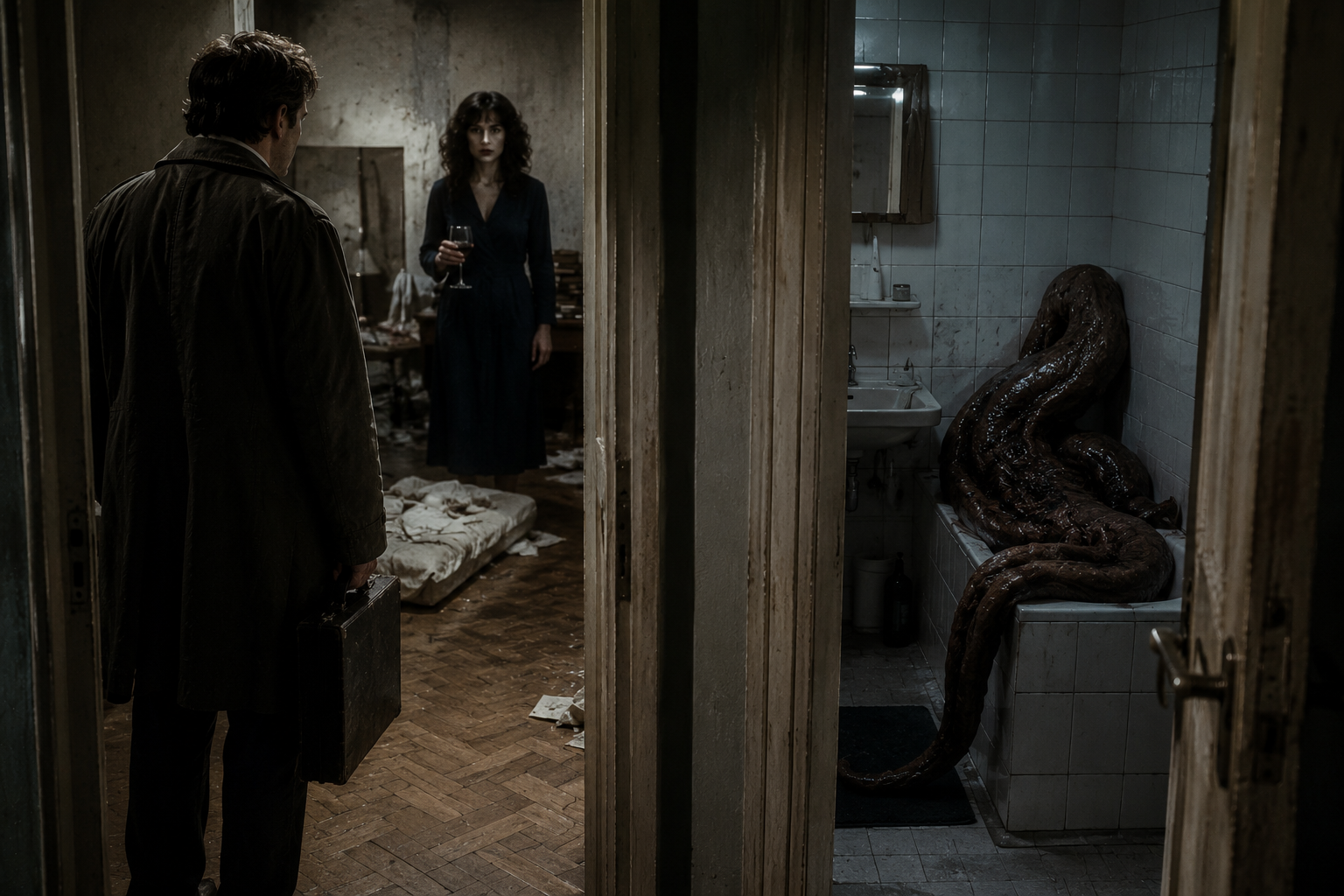
He enters Anna’s apartment, which deserves its own diagnosis.
Not bohemian eccentricity.
Not messy heartbreak.
This is post-human domestic collapse.
Mattress on the floor.
Disheveled disorder.
Emotional refugee architecture.
The environment communicates one thing clearly:
ordinary human intimacy has vacated these premises.
Anna offers wine.
The detective responds:
“I have children!”
Sir. That does not answer anything.
Then he enters the bathroom and, for perhaps the first and only time, achieves correct classification:
“Wait… what is this?”
Excellent question.
Unfortunately, he has entered protected territory.
Because Anna’s response is not shame, explanation, or concealment.
It is pure territorial defense.
“You die now.”
Broken bottle.
Stabby stab.
Containment breach neutralized.
Private investigation concluded.
Inter-species relationship preserved.
And suddenly the film performs a nasty reversal.
Up until now, we’ve been encouraged to read Mark as the dangerously possessive one.
Jealous husband.
Obsessive pursuer.
Emotionally unstable interrogator.
Fair enough.
But then Anna literally murders a man for interrupting worm date night.
Which forces a reassessment.
Hold on.
Who exactly is possessive here?
Because Mark may be obsessive.
But Anna is operating at full territorial predation.
That’s what makes the title so unstable.
Possession no longer means simple jealousy.
It means obsession.
Ownership.
Territorial attachment.
Emotional captivity.
Metaphysical inhabitation.
Everyone is possessed by something.
Mark by obsession.
Anna by catastrophic desire.
The organism by… unclear objectives, though apparently a strong commitment to relationship continuity.
And that’s what makes the reveal genuinely disturbing.
The horror is not merely:
woman has monster.
The horror is:
human intimacy has been reclassified into something biologically unreadable.
THE ORGANISM AS ARCHITECTURAL SABOTAGE
At some point, Possession stops asking us to classify the creature psychologically and starts weaponizing it architecturally.
Because yes, one can absolutely read the organism as grotesque psychosexual symbolism.
Żuławski is not exactly hiding the subtext in a locked filing cabinet.
The metaphor is in the bathroom making unsettling noises.
But the deeper horror is more interesting.
Mark thinks he is losing his wife to another man.
Painful.
Humiliating.
Recognizably human.
Then the film effectively responds:
“That was adorably conventional of you.”
Because Mark is not competing with another husband archetype.
He is competing with a post-human replacement intimacy system.
Which is darkly hilarious in the most existential way possible.
Mark’s internal monologue has to be:
“So just to clarify… my wife did not leave me for a colleague, artist, or mysterious European intellectual.”
“She left me for… whatever THAT is.”
(long pause)
“I may need to completely revise masculinity.”
But here’s the stronger thesis:
the organism is not merely replacing Mark.
It is invading architecture.
That matters.
Because architecture, throughout this film, represents stability.
Domestic space.
Order.
Containment.
Predictability.
Human beings build rooms, homes, institutions, and routines because architecture reassures us that reality has boundaries.
Walls separate inside from outside.
Bathrooms remain bathrooms.
Bedrooms remain bedrooms.
Marriage remains marriage.
Then Possession introduces this thing and essentially says:
“That’s cute.”
“You built structures.”
“You move through them confidently.”
“You trust them.”
“Now let’s see what happens when I drop THIS into the system.”
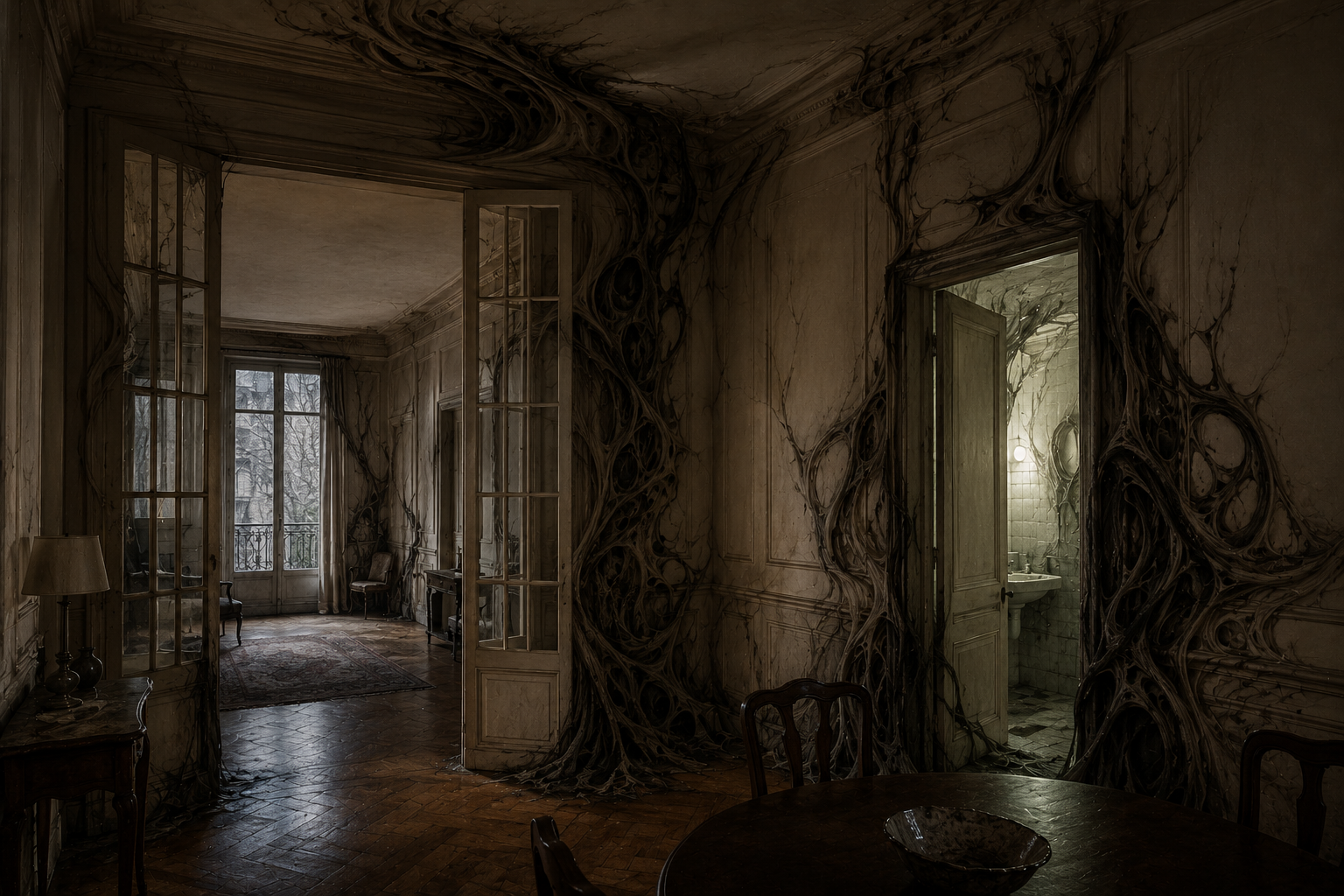
And suddenly architecture becomes contaminated.
The organism does not simply exist.
It breaches.
It invades domestic order like an eldritch detonation device.
It reclassifies intimate space.
Bathrooms stop being functional rooms.
Apartments stop being domestic environments.
Relationships stop being recognizably human.
The architecture itself becomes biologically unreadable.
That’s much darker than simple sexual betrayal.
Because the horror is not:
wife has monster.
The horror is:
the systems humans built to stabilize emotional reality are catastrophically incompatible with whatever this thing represents.
This is not adultery.
This is hostile replacement architecture.
Human intimacy has not merely failed.
It has been technologically upgraded into something post-human.
Which is a sophisticated way of saying:
“My wife left me for an eldritch organism, and now reality itself requires reclassification.”
(To be continued, because, yeah, this film has a lot to unpack.)