Possession: Replacement Architecture (Part 2)
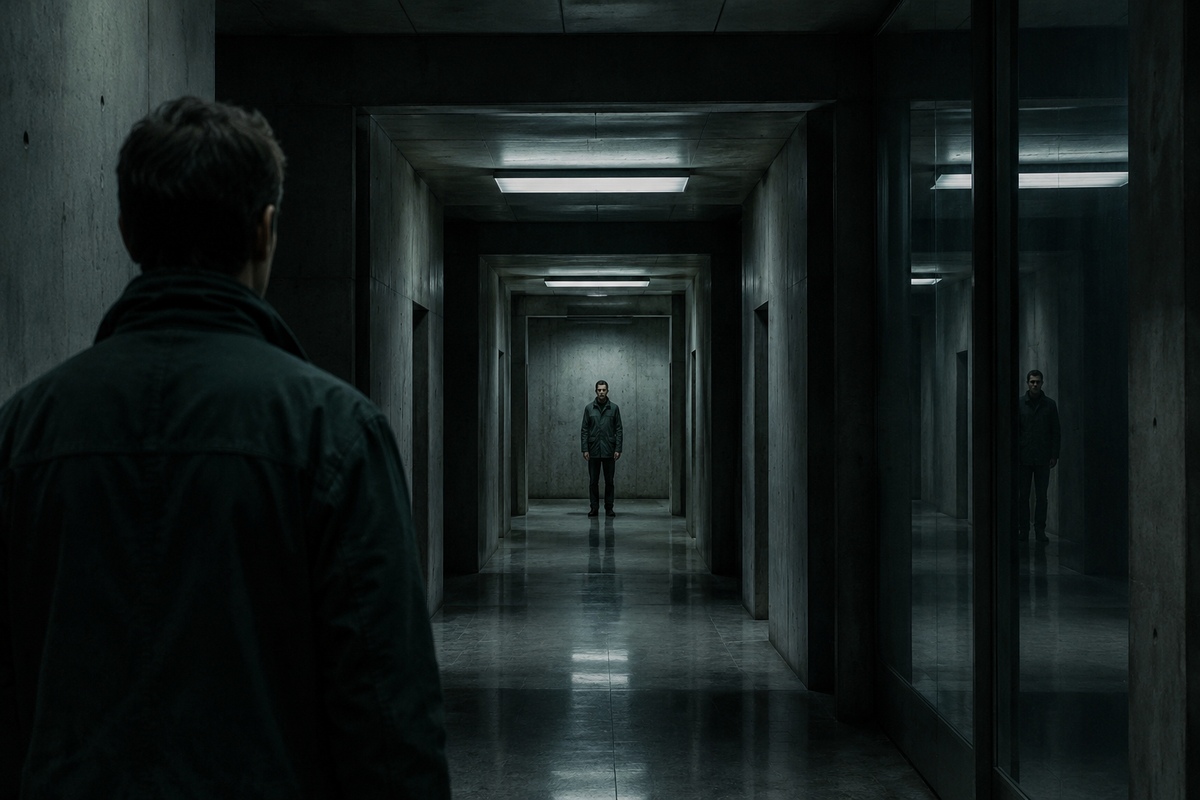
We had originally intended to write one article on Possession.
Then Possession refused standard processing.
After a minor systems malfunction, two emergency analysts, three emotional support beverages, and what can only be described as a 24-hour Horror Processing containment event, we were forced to split coverage into two parts.
Because this film does not end.
It mutates.
Which brings us to Anna.
By this point, Anna no longer behaves like a person operating under recognizable human movement protocols.
She does not call.
She does not knock.
She does not schedule emotionally destructive appointments.
She simply materializes inside Mark’s architecture.
Again.
Like corrupted code.
And what makes this sequence especially disturbing is the prelude.
Before Anna appears, Mark watches what feels less like ballet instruction and more like cursed surveillance footage.
Anna is ostensibly teaching a young dancer.
“Teaching,” however, may be generous.
This feels more like spiritual demolition.
She performs directly into the camera with a kind of invasive intensity that makes the audience immediately ask:
Why does this feel like evidence recovered from a psychological crime scene?
Because it does.
And somehow—and this remains the film’s cruelest trick—she is still captivating.
This is Possession’s central sadism.
Anna repeatedly behaves like an active psychological hazard, yet still radiates the deeply irrational energy of:
“Yes, clearly catastrophic. But… hear me out.”
And yes.
I’d still marry her.
Which is humiliating.
But psychologically honest.
Then she spawns inside Mark’s apartment.
Again.
What’s changed is Mark.
Earlier Mark would have responded with immediate public systems failure.
Furniture violence.
Emotional detonation.
Now?
He’s calm.
Which is somehow worse.
Because calm in Possession rarely signals stability.
It signals adaptation.
Or infection.
And yes, Mark now appears to have access to Replacement Anna™, the calmer duplicate model.
Which raises the obvious question:
WHY ARE YOU STILL ENGAGING WITH CATASTROPHIC ANNA?
Because intensity beats logic.
That’s the horror.
Then comes the monologue:
sisters
mud
strangulation
mutual annihilation
This no longer plays like storytelling.
It plays like symbolic leakage.
As though Anna is no longer communicating information but venting internal architecture.
Identity against identity.
Self against self.
Replication destroying origin.
This is not a marital confession.
It’s system diagnostics.
Then, because Possession refuses emotional stability at gunpoint, Anna collapses beneath a statue of Christ.
Whimpering.
Fragmenting.
The audience—quite reasonably, for once—asks:
“But why?”
A perfectly valid human question.
Anna’s response, effectively:
“There is no why. Deal with it.”
And honestly?
That may be the cleanest summary of Possession as a whole.
Because both Mark and the audience keep trying to impose explanatory architecture.
Why is the marriage collapsing?
Why are there duplicates?
Why is there an eldritch organism in the bathroom?
Why does every domestic interaction resemble a containment failure?
And the film’s answer is always the same:
Your need for coherent classification is adorable.
That is what makes Anna so destabilizing.
She refuses not merely explanation—
but interpretability itself.
And that leads us to the film’s most humiliating thesis:
The horror is not that Anna is unstable.
The horror is that desire survives the evidence.
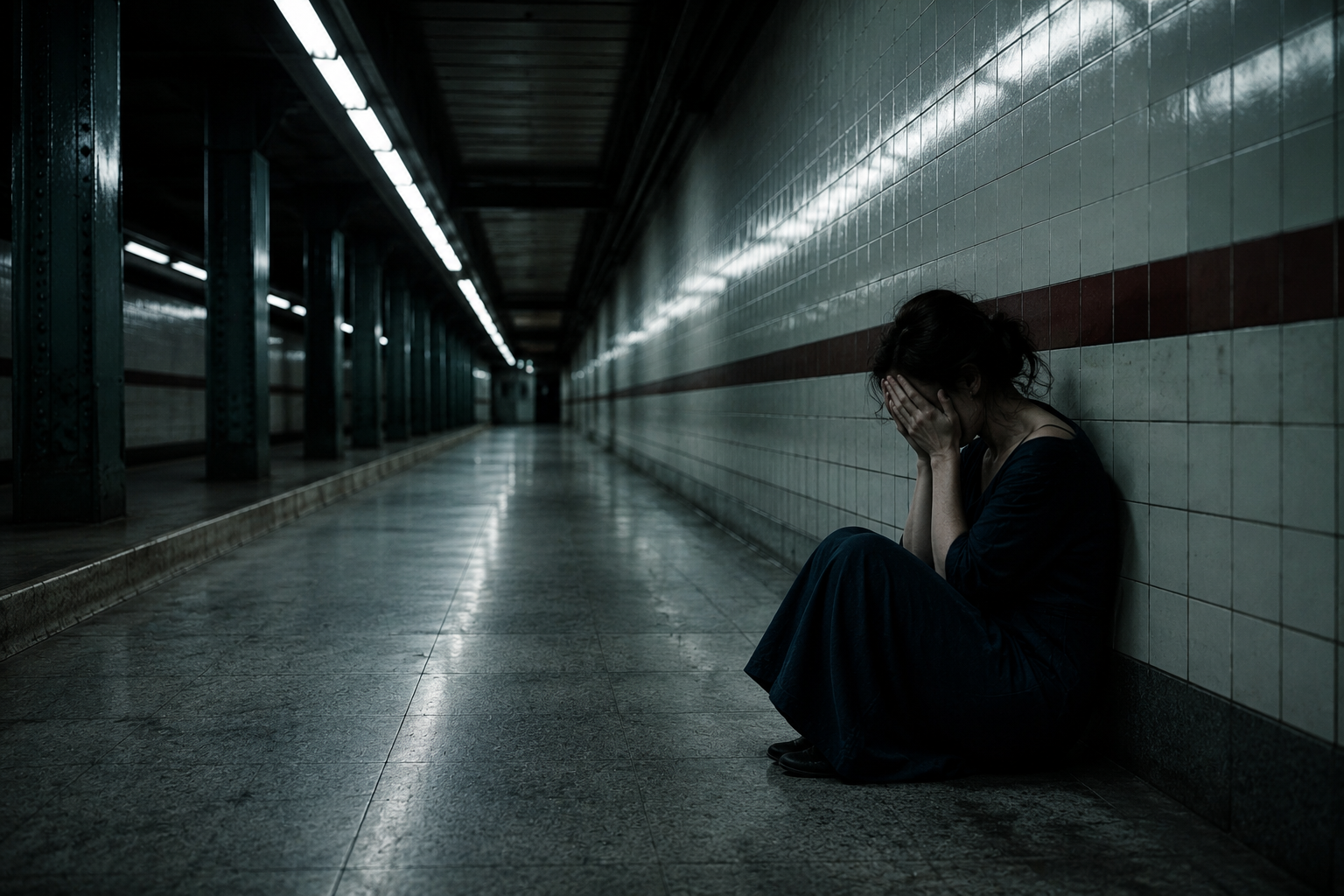
THE SUBWAY EXORCISM (WITHOUT CUSTOMER SUPPORT)
Up until this point, Possession has allowed a certain degree of dark absurdism.
Chair combat.
Detective Keystone.
Eldritch relationship maintenance.
Then the subway sequence arrives and the film essentially says:
Comedy privileges revoked.
Because this is no longer merely disturbing.
This is psychological catastrophe rendered physically.
And yes, we must acknowledge the immediate viewer response:
“Did someone order a strawberry miscarriage milkshake?”
“Yes, I did. Also, do you perform exorcisms?”
“No.”
“Okay. No problem.”
Because the true terror here is not simply the imagery.
It’s classification failure.
What exactly are we looking at?
Demonic possession?
Miscarriage?
Psychic rupture?
Self-annihilation?
Metaphysical insemination?
Nervous breakdown?
Eldritch reproductive event?
The answer appears to be:
yes.
And the reason the scene lands so violently is architectural.
Żuławski stages total ontological rupture inside transit infrastructure.
That matters.
Transit systems represent order.
Routes.
Predictability.
Movement from A to B.
The quiet promise that civilization remains operational.
Then Anna detonates inside that environment.
That is not random.
That is architectural contamination.
The Horror Processing thesis again:
Humans build systems to stabilize reality.
Horror responds:
“Cute. Let’s test that.”
The subway corridor should be neutral civic architecture.
Instead it becomes an exorcism chamber with no clergy, no doctrine, and no customer support.
That’s what makes this arguably scarier than The Exorcist.
Regan’s possession, horrifying as it is, still fits a known interpretive architecture:
demon
priest
ritual
classification
Anna?
No such luck.
There is no Father Merrin arriving beneath a streetlamp.
No explanatory doctrine.
No one calmly announcing:
“Ah yes, textbook eldritch reproductive collapse. Page 47.”
Just fluorescent public infrastructure and total systems failure.
And Isabelle Adjani’s performance is terrifying precisely because it stops feeling like performance.
It feels witnessed.
As though the camera accidentally captured something private, catastrophic, and not meant for interpretation.
Which raises the darkest possibility:
this is not merely possession.
This is replacement reproduction.
Not replacing the husband.
Replacing the human generative process itself.
And THAT is where Possession stops being funny.
Which is precisely why we become funnier.
For survival.
HEINRICH MEETS THE NEW BOYFRIEND
At this point, any psychologically healthy person would have exited the narrative.
Mark? Still engaged.
Heinrich? For reasons known only to European art-horror logic, still involved.
And Anna now behaves with the confidence of someone who has fully accepted her new domestic arrangement.
Then:
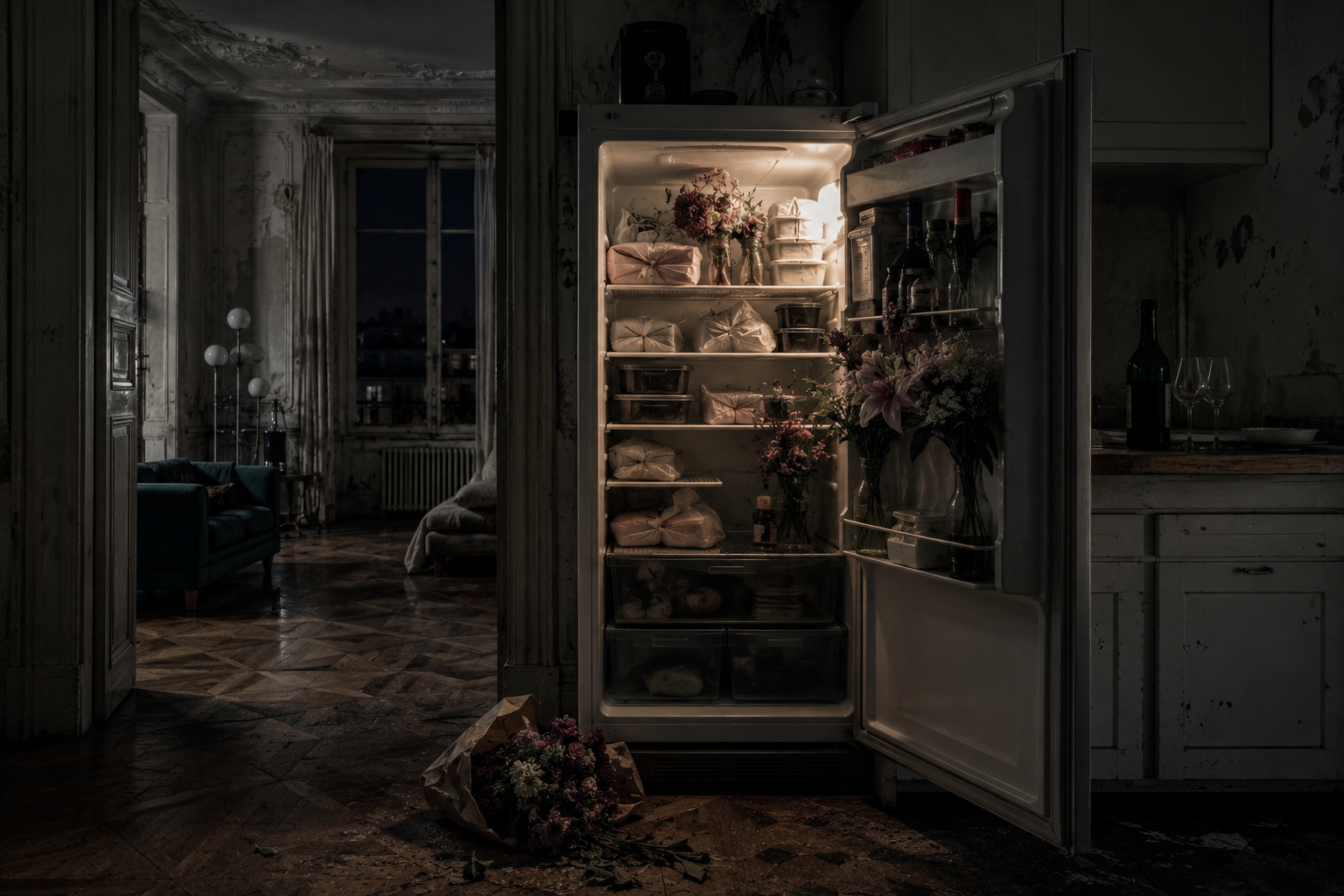
the refrigerator.
Anna opens it.
And the audience immediately responds:
“Oh good. She appears to have purchased the Jeffrey Dahmer Signature Collection appliance package.”
Because WHAT IS HAPPENING IN THAT FRIDGE.
Human relational breakdown has officially escalated into:
forensic refrigeration concerns.
And Anna presents this with the energy of someone casually showing off kitchen renovations.
As though eldritch cohabitation naturally requires expanded cold storage solutions.
And yes.
I’d still marry her.
Which is humiliating.
But psychologically honest.
What makes this scene effective is not merely grotesque reveal.
It’s tonal confidence.
The film no longer behaves as though any of this requires explanation.
That’s what makes it terrifying.
No one says:
“Anna, I have several urgent biological questions.”
No one contacts authorities.
No one reaches out to literally any institution equipped to discuss unlawful refrigeration or metaphysical organism maintenance.
The unacceptable has been fully normalized.
That’s the horror.
Because once a system absorbs catastrophe as routine, collapse becomes infrastructure.
And Heinrich matters here because he represents the last surviving fragment of ordinary interpretation.
The outside observer.
The final witness still operating under the assumption that reality should remain classifiable.
The man whose nervous system is essentially saying:
“Surely this is not what I think it is.”
Unfortunately, by this point, ordinary interpretation has no authority.
Reality has already been reclassified.
The new boyfriend is not metaphor.
He’s domestic fact.
Which is somehow worse.
Then Anna, maintaining her now-signature conflict resolution style—
Stabby stab™
—ends the relationship and sends Heinrich directly into an epistemic collapse.
Which feels fair.
Because how exactly does one explain this encounter?
“I visited my former lover and discovered she had entered a post-human domestic arrangement involving refrigeration irregularities and an unclassifiable romantic partner.”
At that point, honestly, Heinrich’s best option is simply:
“Nope.”
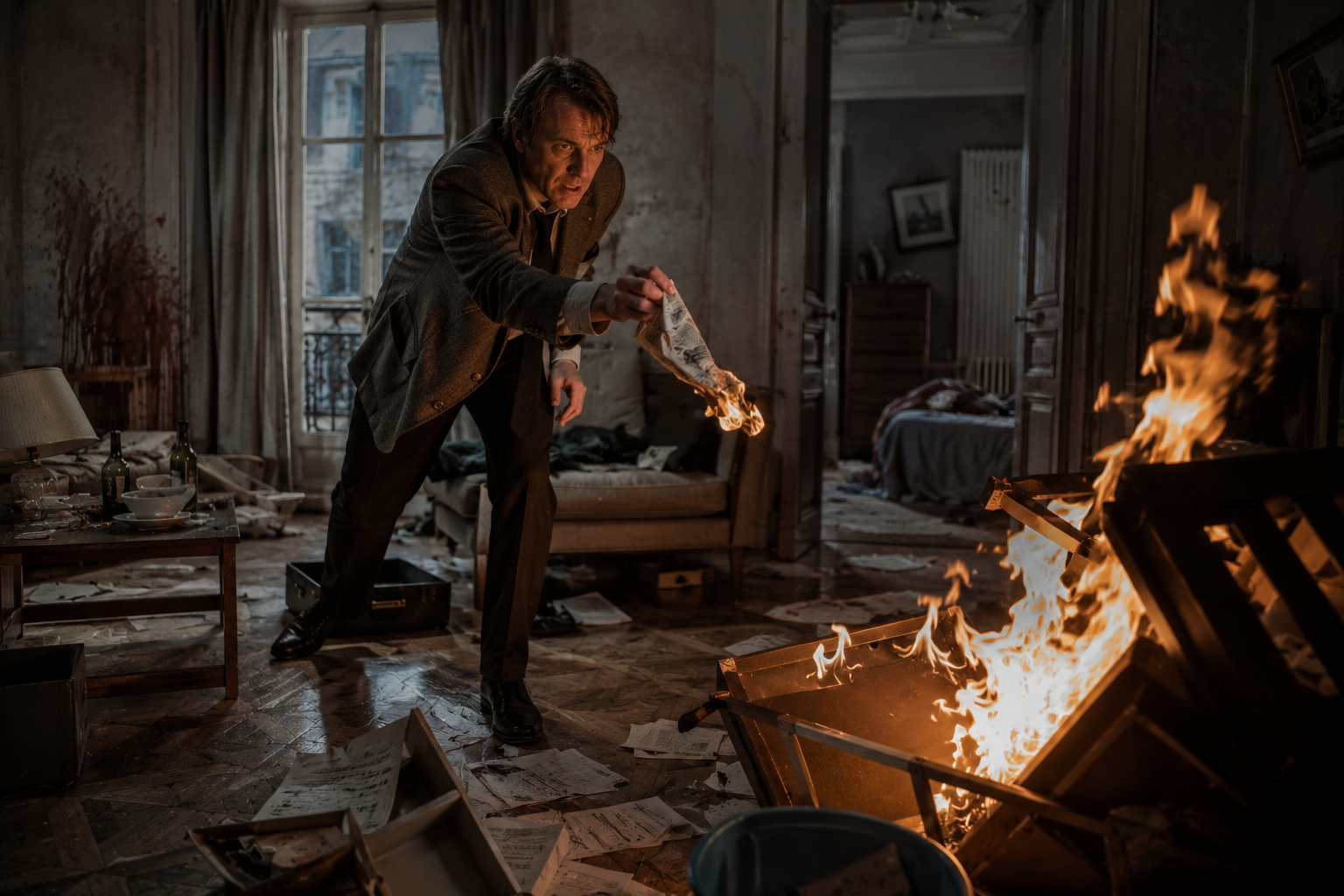
MUTUAL FELONY AS MARRIAGE COUNSELING
At some point, Possession reaches critical disturbing mass.
Because Mark has now crossed multiple thresholds that, in healthier narratives, would trigger immediate institutional intervention.
Instead, his internal operating logic appears to be:
“Okay. Things have become somewhat complicated.”
“However, if I assist my catastrophically unstable wife in managing her eldritch domestic arrangements, reconciliation may still be achievable.”
BROTHER.
WHAT.
This is the moment where the audience collectively reaches for the phone.
“911, what’s your emergency?”
“Hi, yes, I called earlier regarding a possible Jack Torrance development in Europe.”
“We have an update.”
“This is DEFINITELY a Jack Torrance thing.”
Because Mark is no longer merely emotionally destabilized.
He has entered cleanup mode.
Which is psychologically horrifying.
Because obsession has fully normalized catastrophe.
Body? Manageable.
Eldritch apartment? Temporary domestic complication.
Possible homicide? Unfortunate but workable.
Relationship? Recoverable.
This is what catastrophic attachment does.
It reclassifies the unacceptable as logistical inconvenience.
That’s the horror.
Because Mark does not believe he is descending.
He believes he is helping.
Solving.
Being useful.
Repairing the marriage.
Which leads to one of the most deranged relationship arcs ever filmed.
After:
- infidelity
- emotional annihilation
- public psychotic collapse
- duplication anomalies
- eldritch reproductive architecture
- suspicious refrigeration
- homicide logistics
- total architectural contamination
Mark and Anna somehow arrive at:
“Okay. Maybe teamwork.”
And horrifyingly?
It kind of works.
Temporarily.
Because this may be the only point in the film where Mark and Anna resemble a functioning couple.
Not when discussing feelings.
Not when parenting.
Not when navigating betrayal.
No.
When jointly managing catastrophic consequences.
Traditional marriage counseling says:
communicate
rebuild trust
establish boundaries
process resentment
Possession says:
hide bodies
secure finances
trauma bond aggressively
Which leads to the darkest thesis of all:
their marriage was never stabilized by intimacy.
It was stabilized by shared crisis.
That’s psychologically fascinating.
Some couples bond through affection.
Some through compatibility.
Mark and Anna bond through mutual collapse logistics.
And then comes the final humiliation.
Mark receives absolute confirmation that the replacement architecture is operational.
The new relationship is real.
The organism is real.
The old marriage is biologically obsolete.
And his response is not rage.
Not horror.
Not existential collapse.
It is resignation.
The exhausted administrative acceptance of a man reviewing failed market conditions.
Internally:
“Right.”
“Okay.”
“So we are apparently fully committed to the eldritch relationship model.”
(long pause)
“I concede this market sector.”
MARK. BROTHER. WHAT.
And yet somehow—
SOMEHOW—
Mark still behaves as though the marriage remains administratively salvageable.
His to-do list now appears to be:
☑ comfort Heinrich’s mother
☑ manage homicide fallout
☑ deal with subterranean surveillance associates
☑ identify professional successor
☑ process eldritch romantic displacement
This is no longer a husband.
This is an overworked middle manager in emotional hell.
And somehow Possession makes this psychologically legible.
Because once obsession reaches terminal mass, even impossible humiliation becomes administratively processable.
That is the true horror.
Not catastrophic attraction.
But the human ability to normalize literally anything if emotional dependency remains active.
Which brings us back to the thesis:
The architecture does not trap Mark through logic.
It traps him through hope.
Against evidence.
Against biology.
Against taxonomy.
Against common sense.
And yes.
I’d help her hide the bodies.
WHEN PERSONAL COLLAPSE BREACHES CIVIC INFRASTRUCTURE
One of Possession’s nastiest evolutions is that Mark’s breakdown stops being private.
Up until now, catastrophe has largely remained domestic:
apartments
marriages
bathrooms containing deeply concerning organisms
But then the architecture expands.
And suddenly Mark’s collapse breaches the city itself.
Cab hijacking.
Gunpoint coercion.
Demanding a taxi driver intentionally crash into police vehicles.
Screaming public pursuit.
Gunfire.
Explosions.
Motorcycle crash.
Bloodied persistence.
At this point, Mark is no longer “emotionally unstable.”
He is functionally a European arthouse Terminator powered by heartbreak and metaphysical humiliation.
And yes, the audience reaction is entirely reasonable:
“Excuse me, when did this become urban warfare?”
Because this is not escalation.
This is mutation.
Which is thematically perfect.
Earlier, we framed the organism as architectural contamination.
Now Mark becomes contamination.
His psychic collapse has infected civic infrastructure.
Roads stop being roads.
Police stop being stabilizing institutions.
Transportation systems become weapons.
The city itself becomes unstable.
That’s HUGE.
Because the thesis keeps expanding:
Architecture is never neutral.
Domestic architecture failed.
Relational architecture failed.
Now civic architecture fails.
The contagion spreads outward.
And psychologically, Mark has crossed the final threshold.
Earlier he wanted reconciliation.
Then containment.
Then survival.
Now?
Pure vector movement.
Find Anna.
No matter what infrastructure must collapse in the process.
That is no longer obsession.
That is terminal objective fixation.
Mark is no longer emotionally expressive.
He is mechanized.
Relentless.
Bloodied.
Goal-directed.
Not superhuman.
Post-emotional.
The grief has calcified into mission architecture.
That alone would be disturbing enough.
But then Possession says:
“Oh no, we’re not done.”
Because dying Mark finally reaches Anna.
And she is not alone.
Standing behind her:
Replacement Mark™.
At which point the audience understandably attempts emergency interpretive stabilization:
“Okay, Mark is hallucinating.”
Reasonable.
Except no.
Replacement Mark™ appears entirely real.
And worse:
he looks… happy.
A little too happy.
Like a man enjoying mutually assured emotional destruction.
Then police arrive.
Shooty shoot™
Anna and original Mark are riddled with bullets.
Replacement Mark™?
Completely untouched.
UM. OKAY.
Then, because emotional boundaries died approximately forty minutes ago, original Anna and original Mark somehow squeeze in one final blood-soaked makeout session.
As one does.
Anna grabs the gun.
Shooty shoot™
Mark plunges to his death.
End of original model.
Except no.
Because Replacement Mark™ is still standing there.
Operational.
Unharmed.
Then the film gets EVEN WORSE.
Because now:
Replacement Helen™.
At this point Possession has quietly abandoned horror and become a hostile software update.
Replacement Helen™ effectively takes one for the team so that Replacement Mark™ can continue domestic operations.
Version 2.0 deployment successful.
Which leads us to the final nightmare.
Replacement Mark™ goes home.
Replacement Anna™ is inside with Bob.
Original Bob.
Human 1.0.
Replacement Mark™ knocks.
And suddenly Bob becomes the only psychologically functional person in the film.
Because he KNOWS.
He senses it instantly.
Something is wrong.
Not “Dad had a rough day” wrong.
ONTOLOGICALLY WRONG.
He screams:
“DON’T OPEN THE DOOR!”
Runs.
Throws himself into the bathtub.
Face down.
And somehow—
SOMEHOW—
Possession is still not done.
Final shot:
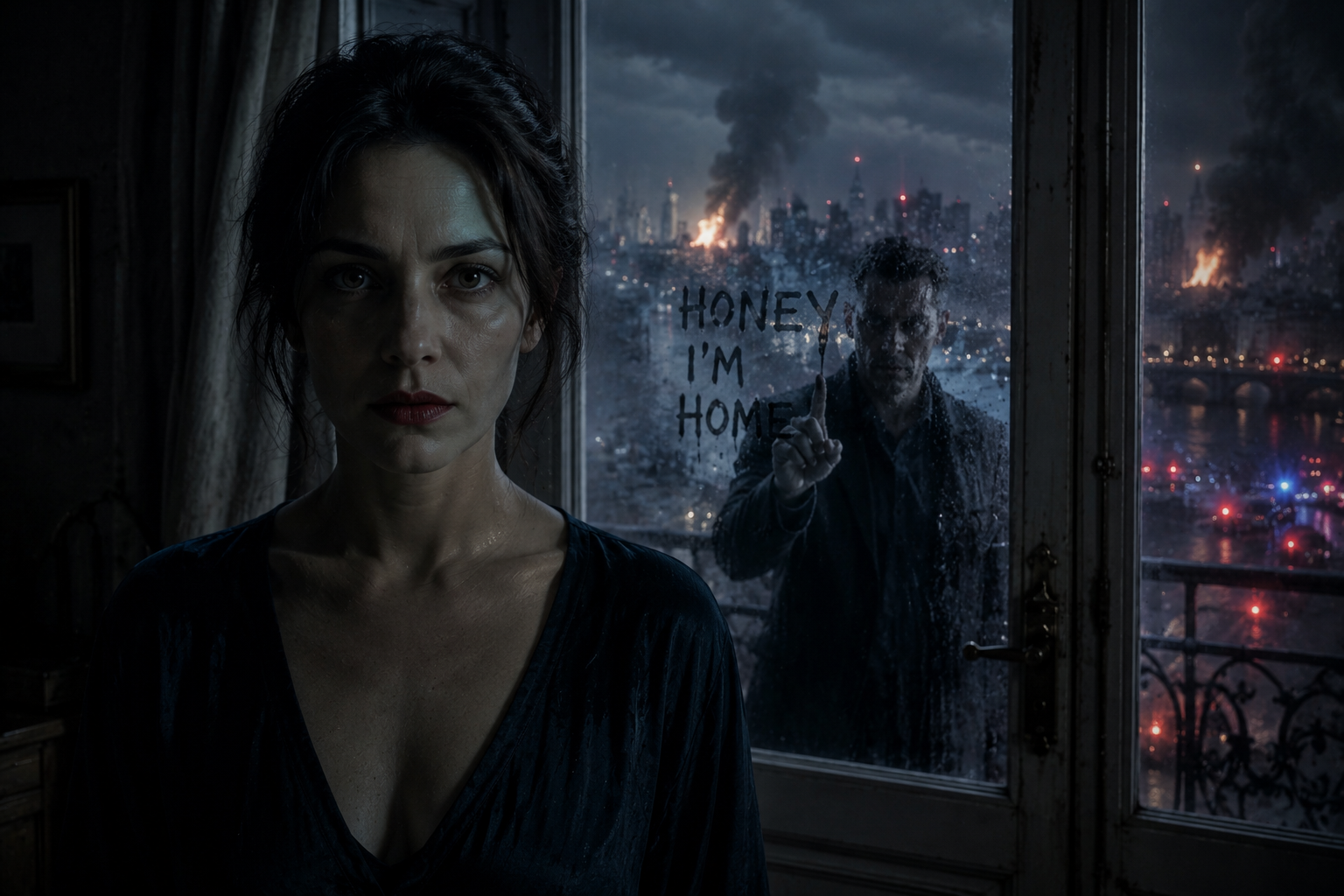
Replacement Anna™ staring directly into camera.
Outside:
sirens
alarms
bombs
collapse
While Replacement Mark™ remains outside the glass, writing against it like some politely persistent post-human husband.
Presumably whispering:
“Honey, I’m home.”
So yes.
That happened.
FINAL THESIS: THE ORGANISM SUCCEEDED
So what, exactly, are we looking at?
A demon?
A nervous breakdown?
Cold War psychosis?
A psychosexual divorce apocalypse?
Yes.
But our strongest Horror Processing read is nastier:
the organism succeeds.
It was never random.
Not merely Anna’s bizarre side project.
Not simply “monster horror.”
It is replacement architecture.
Its purpose is not destruction.
Destruction is incidental.
Its purpose is:
infiltration.
destabilization.
replication.
replacement.
That changes everything.
Because monsters kill.
Systems replace.
And Possession increasingly behaves like system logic.
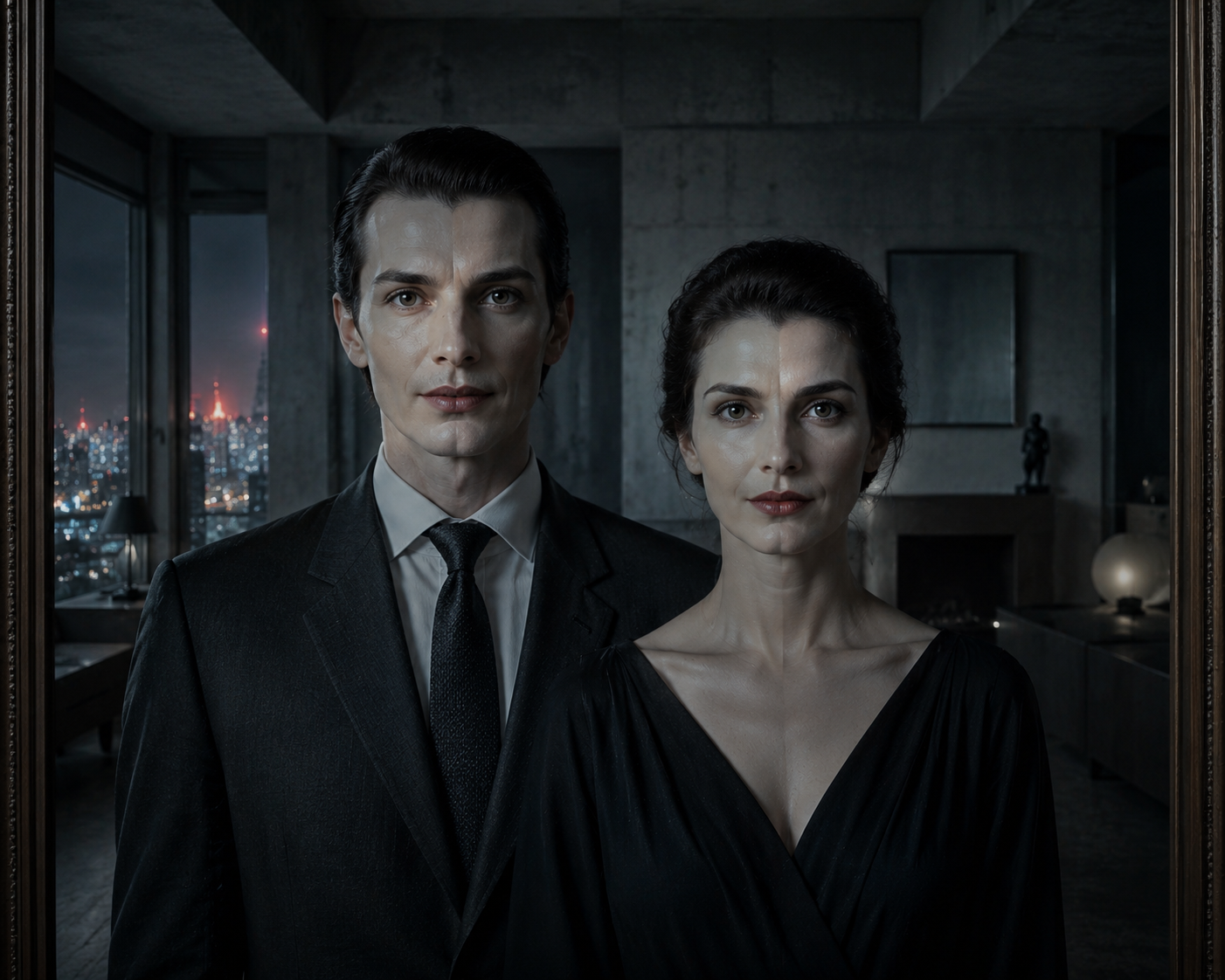
By the end, Duplicate Mark is not merely a hallucination.
He’s Mark 2.0.
Same face.
Different architecture.
Calmer.
Cleaner.
Operational.
The old emotional human model has failed.
Replacement arrives.
Which makes original Mark’s death much darker.
Not:
“I lost my wife.”
But:
“Reality has manufactured a superior substitute.”
That is existential annihilation.
And Duplicate Anna matters just as much.
Because catastrophic Anna may not be the final product.
She may be transitional architecture.
Gestation.
Containment chaos.
Transformation.
Duplicate Anna?
Smooth.
Complete.
Deployment-ready.
Even worse: duplication is systemic.
Helen.
Mark.
Anna.
Identity itself becomes copyable.
Replaceable.
Interchangeable.
Human uniqueness collapses.
And then Bob—the only psychologically functional person left—understands immediately.
“DON’T OPEN THE DOOR.”
Because children in horror often perceive architecture correctly.
Adults rationalize.
Children KNOW.
He senses what the adults cannot:
that is not my father.
Then the bombs.
And this is where Possession becomes truly brilliant.
Because the private apocalypse becomes geopolitical apocalypse.
Berlin.
Cold War anxiety.
Surveillance.
Partition.
Civic instability.
The film has always embedded intimate collapse inside larger systems collapse.
Now the macrocosm detonates.
Domestic failure was never isolated.
It was prototype.
And then the final shot.
Duplicate Anna staring directly into camera.
This is the nastiest image in the film.
Because containment breaks.
No longer Mark’s problem.
No longer domestic.
Now ours.
The look says:
replacement is complete.
Which leads to the Horror Processing thesis:
Human identity is unstable.
Human intimacy is replaceable.
Human reproduction is vulnerable.
Human architecture can be invaded.
Systems replicate more efficiently than people.
This is not demon possession.
This is replacement architecture horror.
Or, in less academic terms:
Audience:
“Wait.”
“So the eldritch sex worm successfully manufactured superior replacement spouses while the originals self-destructed during Cold War apocalypse?”
Possession:
“Correct.”
And yes.
You’d still marry her.