The Texas Chain Saw Massacre Is Not About Leatherface
Some horror films scare you.
Some disturb you.
The Texas Chain Saw Massacre leaves a psychic wound.
What makes the film so terrifying is not simply that it is violent. In fact, compared to modern horror cinema, it contains remarkably little on-screen gore. Yet decades later, viewers still describe it as one of the most upsetting experiences they have ever had watching a movie.
Why?
Because The Texas Chain Saw Massacre does not behave like ordinary fiction.
It behaves like an environmental infection.
The common explanation is that the film is frightening because it feels plausible—that this could happen. But that is too simple, and in some ways less disturbing than the truth. Violence, abduction, exploitation, hidden brutality: these are not hypothetical human possibilities. They exist. We know they exist.
The deeper horror emerges elsewhere.
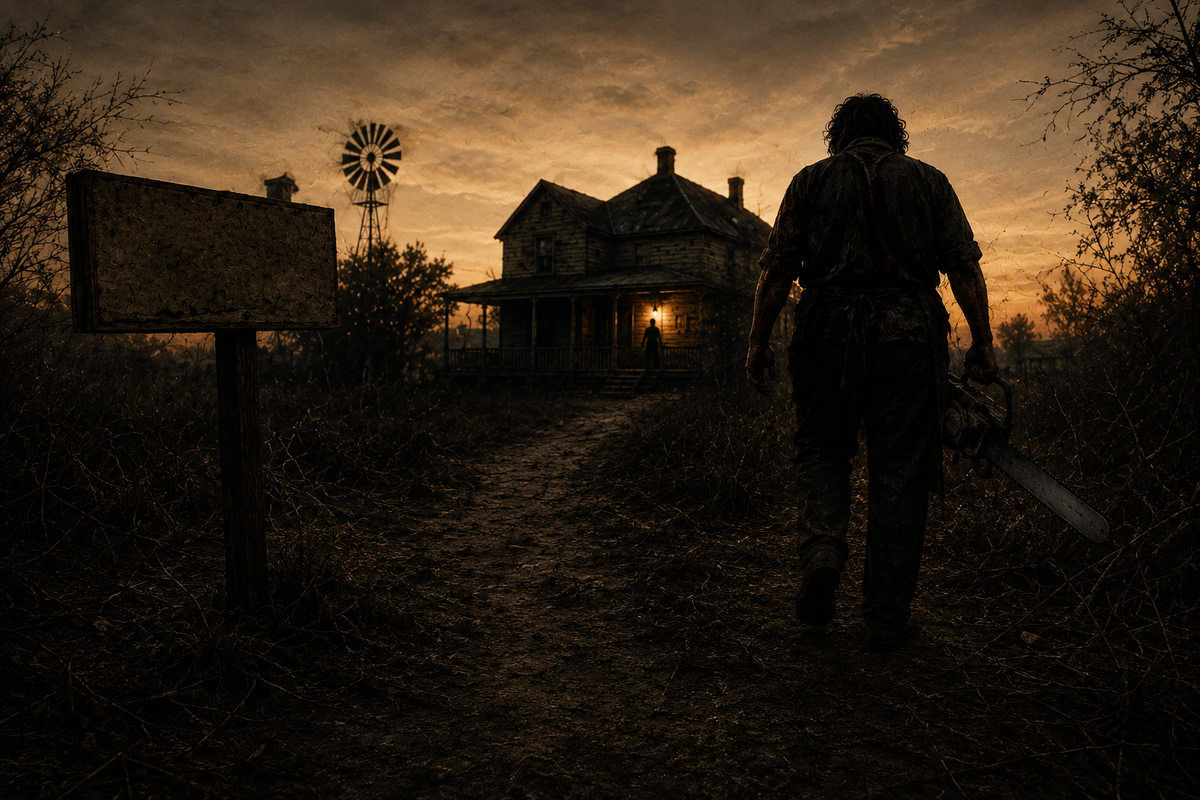
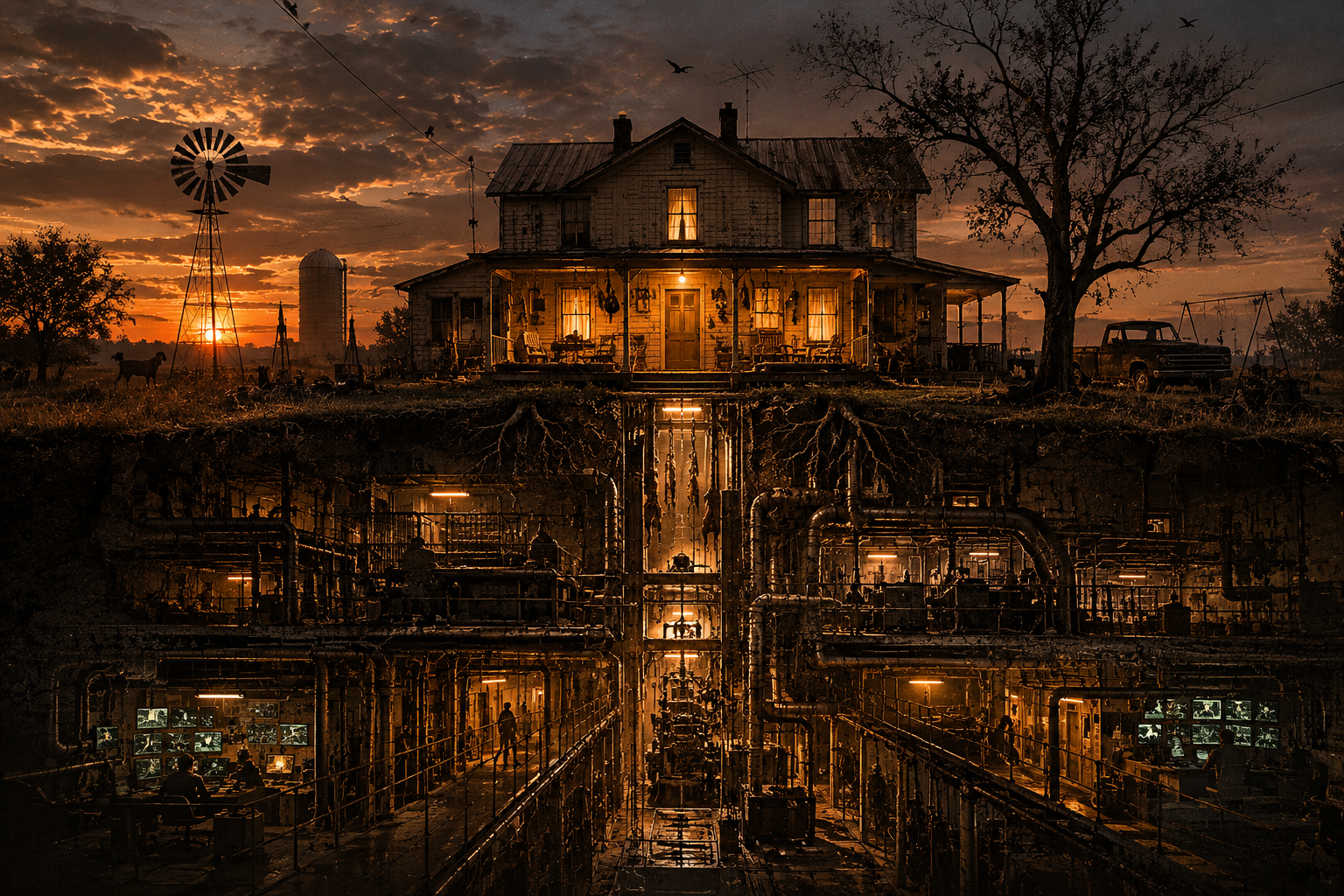
The film gradually creates the unbearable suspicion that what we are witnessing is not merely a family of killers in an isolated house, but a hidden operational system. The house stops functioning as a domestic space and begins to feel like an intake facility. A processing node. An interface between ordinary reality and something far darker lurking beneath it.
The family are no longer simply deranged individuals. They feel procedural. Functional. Executing roles within a structure that predates the protagonists’ arrival and will continue long after their suffering ends.
And Leatherface?
Leatherface is not the true monster. He is not even properly a predator.
He is middle management.
That may be the film’s most terrifying implication: not that evil exists, but that evil here appears organized.
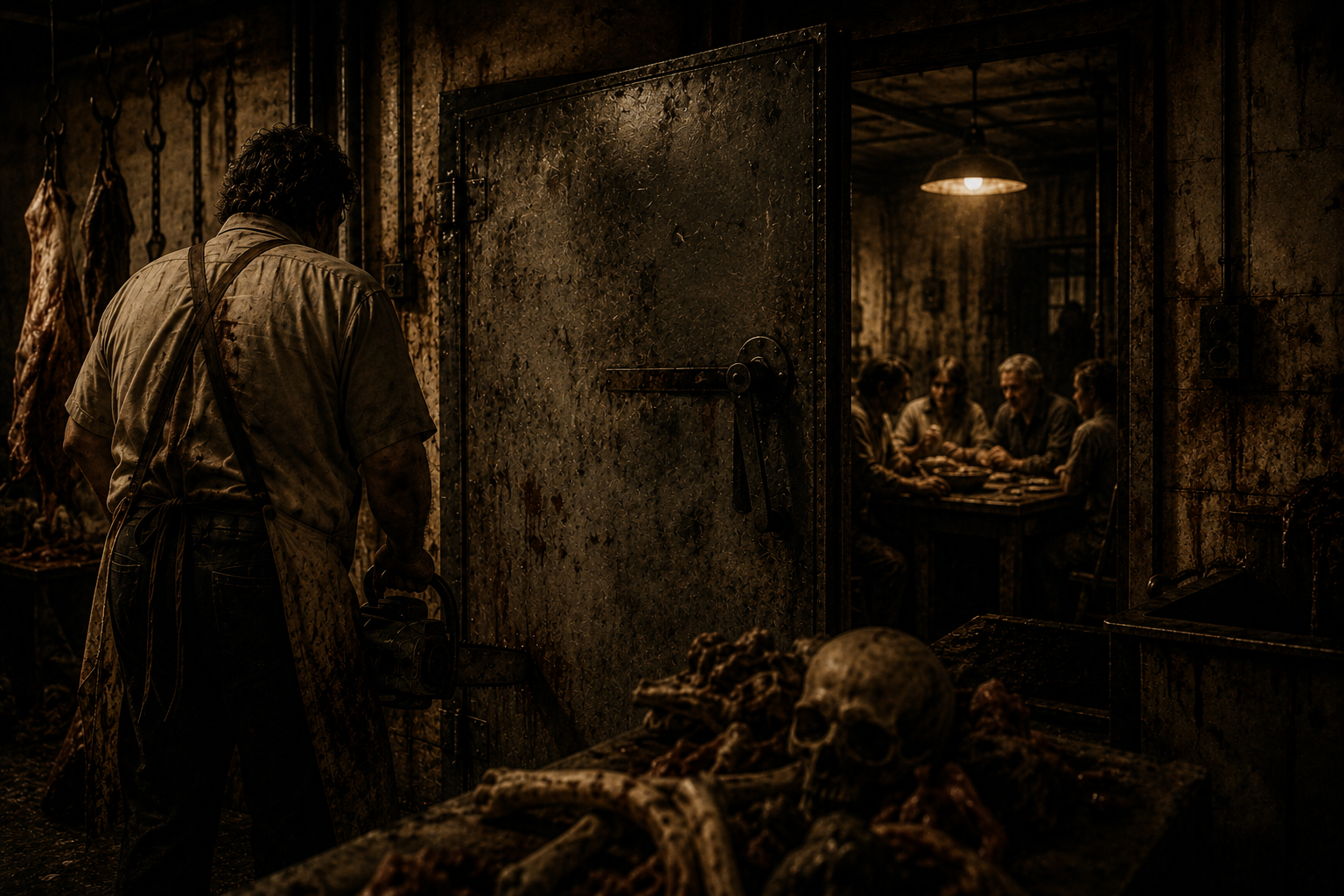
THE SYSTEM
Most people describe The Texas Chain Saw Massacre as a film about a crazy cannibal family.
That reading is understandable.
It is also incomplete.
Structurally, the film is doing something far more disturbing.
The teenagers do not simply encounter violent individuals. They unknowingly enter a closed operational system.
And once they cross that threshold, ordinary reality stops functioning correctly.
Social logic collapses.
Help does not help.
Civilization ceases to operate.
This is one of the defining characteristics of systems horror: not merely danger, but jurisdictional transfer.
The characters believe they are still moving through ordinary America—roads, gas stations, houses, neighbors.
But in reality, they have entered a different governing architecture. One with its own logic. Its own procedures. Its own rules of execution.
The family does not behave like spontaneous psychopaths.
They behave like a functioning system organized around:
- ritual
- labor
- repetition
- processing
- containment
And Leatherface is fascinating precisely because he does not behave like a traditional slasher villain.
He does not stalk with theatrical malice.
He does not monologue.
He does not perform sadism for the audience.
He behaves like a worker.
A laborer.
A man trapped inside an inherited industrial workflow.
Which is why the famous metal door slam after the first kill remains one of the most terrifying moments in horror cinema.
The scene is shocking not simply because violence occurs, but because of how emotionally absent the act feels.
The kill is not expressive.
It is administrative.
The system detected an intrusion.
The intrusion was processed.
Containment restored.
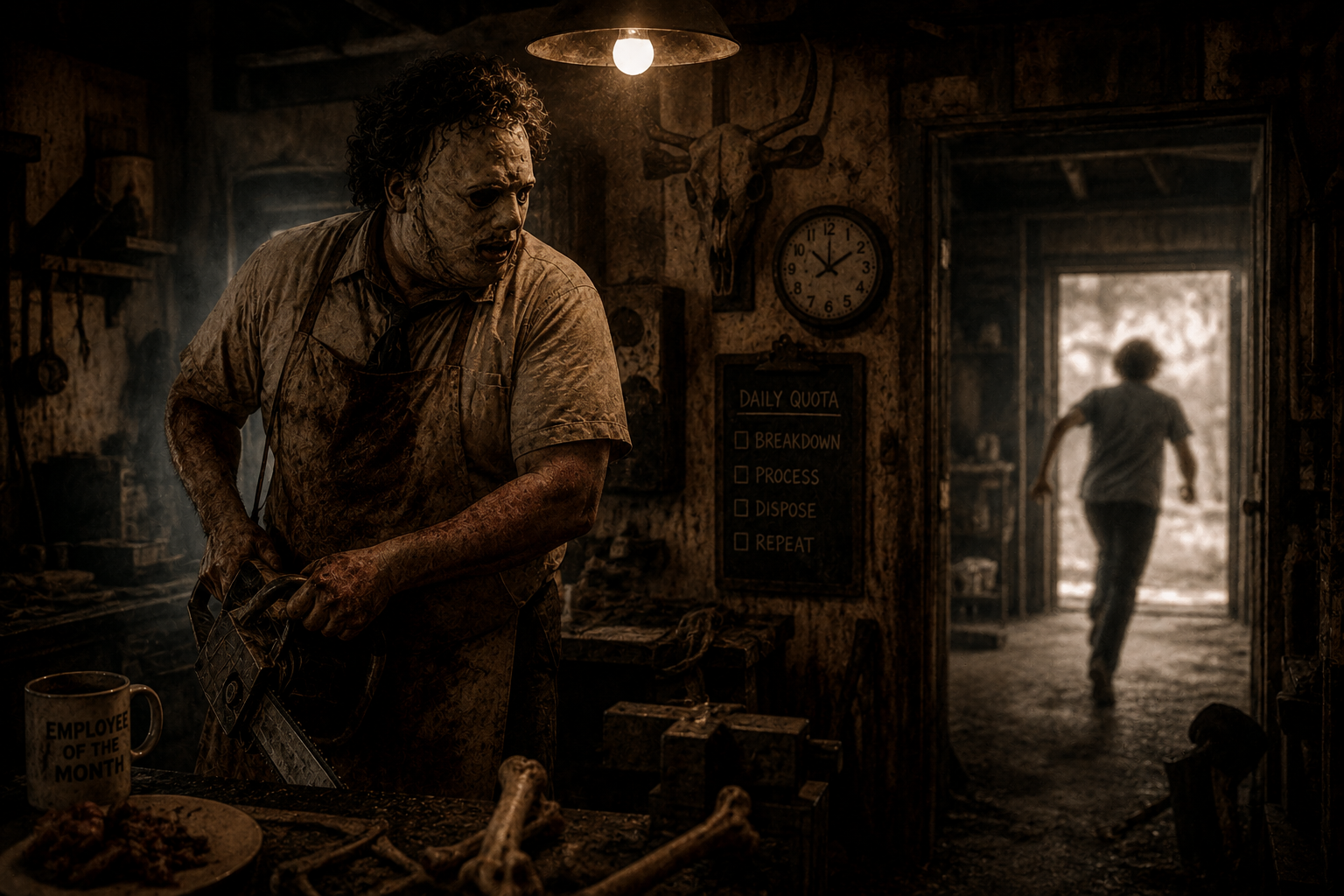
LEATHERFACE AS WORKFLOW
And this is where the film becomes both horrifying and unexpectedly darkly funny.
Because at a certain point, the structure becomes grotesquely absurd.
Teenagers keep entering Leatherface’s territory one by one, and Leatherface begins to feel less like a slasher villain and more like an exhausted maintenance worker responding to repeated containment breaches.
This is what makes the character so strangely unsettling.
Leatherface is not framed as a cunning predator stalking prey for pleasure.
If anything, he often appears confused.
Overwhelmed.
Irritated.
As though random young people keep materializing inside an industrial process he is desperately trying to keep operational.
Which leads to the darkly comic realization:
Leatherface is not hunting teenagers.
Teenagers keep accidentally spawning inside Leatherface’s workflow.
And honestly?
That interpretation may be closer to the truth of the film than the conventional reading.
Because once we understand the house not as a domestic space but as operational infrastructure, Leatherface’s behavior changes meaning.
He is no longer simply “the killer.”
He becomes an executing function within the system.
A worker attempting to restore procedural order after repeated disruptions.
Which somehow makes him even more terrifying.
Because the violence no longer feels personal.
It feels normalized.
Procedural.
Industrial.
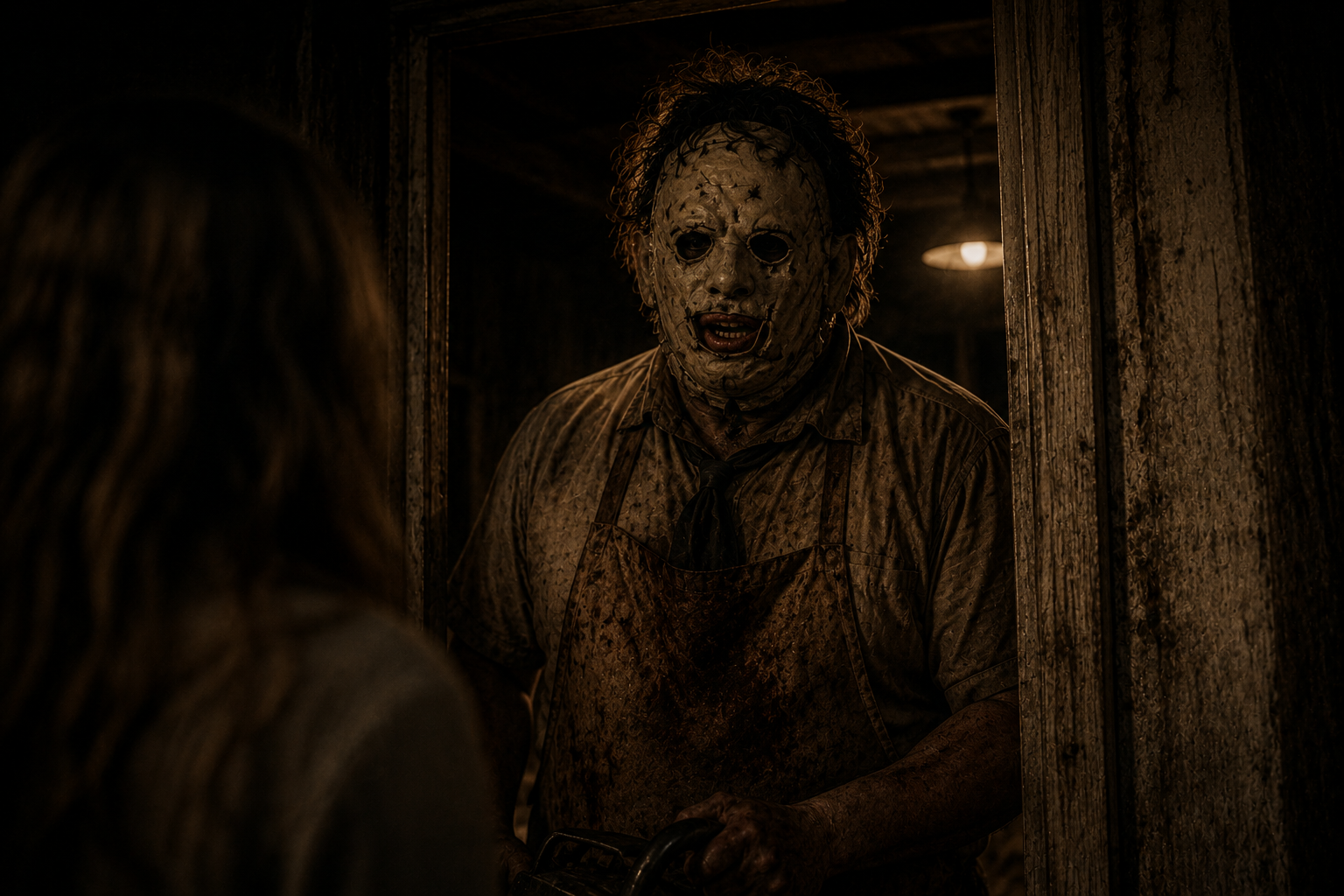
THE MASK
Objectively speaking, Leatherface’s mask is ridiculous.
It looks homemade.
Awkward.
Almost stupid.
And yet the moment he appears in the doorway, the nervous system immediately understands danger.
Why?
Because human beings are born recognizing faces.
Long before language, we learn through expression.
Eyes.
Mouths.
Imitation.
Recognition.
The face is one of the earliest cognitive maps we develop for interpreting reality.
Which is precisely why Leatherface’s mask is so disturbing.
It almost works.
The nervous system initially registers it as human—
—and then immediately detects catastrophic error.
Something is structurally correct.
But cognitively wrong.
This is the uncanny valley at work: the psychological space where something resembles humanity closely enough to trigger recognition, but imperfectly enough to trigger revulsion.
Leatherface’s mask does not conceal his inhumanity.
It reveals failed humanity.
A crude reconstruction of personhood assembled from the remains of actual people.
Which makes the horror deeper than simple grotesquerie.
The audience is not reacting to a monster face.
They are reacting to a corrupted human signal.
Structurally human.
Cognitively rejected.
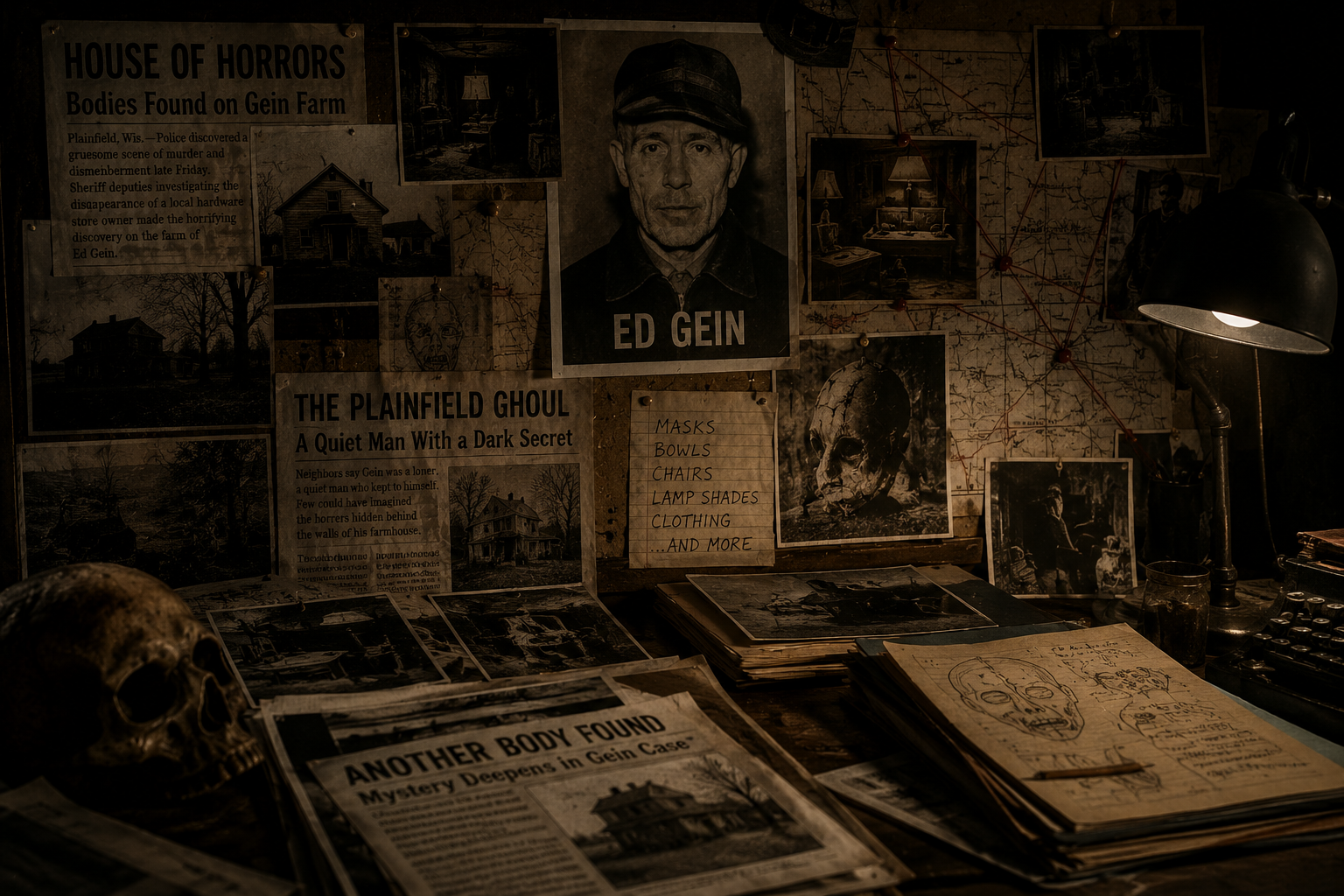
WHY THE FILM FEELS REAL
This is the core of great horror.
The most terrifying horror is not frightening because it feels fictional.
It is frightening because it feels structurally possible.
The audience watches The Texas Chain Saw Massacre and instinctively feels:
“This isn’t completely invented.”
And then they learn about Ed Gein.
And suddenly the psychological barrier between fiction and reality weakens.
The horror is not:
“This exact family exists.”
The horror is:
“Human beings are capable of building systems where atrocity becomes normal.”
That is real.
That is what lingers.
Great horror activates something the audience already suspects:
that beneath ordinary life, hidden violence and hidden systems already exist.
The film feels less like fantasy and more like something uncovered.
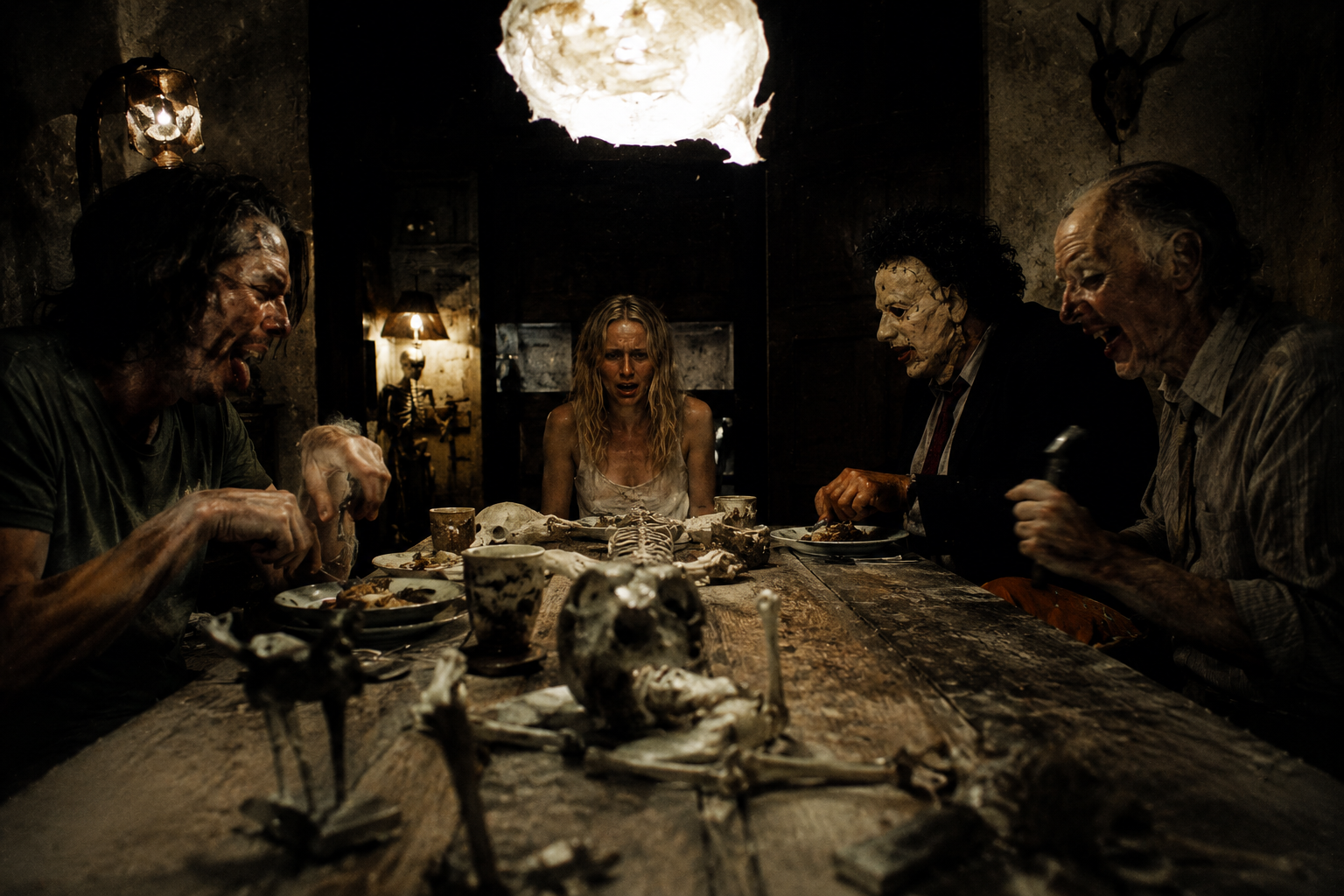
THE DINNER SCENE
The dinner scene is one of the most psychologically upsetting sequences in horror history because Sally is no longer simply in danger.
Danger is only the surface experience.
The deeper horror is epistemic collapse.
By this point in the film, Sally is no longer trapped inside a violent situation. She is trapped inside an entirely different reality structure.
Everyone around her behaves as though this nightmare is coherent. Ordinary. Procedurally normal.
And that is the essence of systems horror.
The terror no longer comes merely from violence, but from the collapse of shared social reality itself.
Human beings survive danger through consensus.
If something terrible happens, we instinctively seek witnesses. Helpers. Confirmation that reality remains intact.
Someone will call the police.
Someone will intervene.
Someone will acknowledge that what is happening is wrong.
But Sally receives none of that.
Instead, she discovers something far more destabilizing: everyone in the room appears to inhabit the same deranged logic except her.
She is the anomaly.
That realization is psychologically devastating.
Because once consensus reality collapses, terror becomes total.
And then the sequence mutates into something even stranger.
It becomes grotesquely absurd.
The grandfather can barely hold the hammer.
People scream over one another.
The family devolves into chaotic dysfunction.
The scene becomes a monstrous parody of domestic ritual—family dinner reassembled as psychotic theatre.
And this is where Hooper does something brilliant.
The film becomes horrifying and bizarrely funny at the same time.
Which should reduce the tension.
But somehow makes it worse.
Because absurdity does not release Sally from the nightmare.
It confirms its autonomy.
This world does not need coherence to remain operational.
The system can be chaotic, incompetent, ridiculous—and still destroy you.
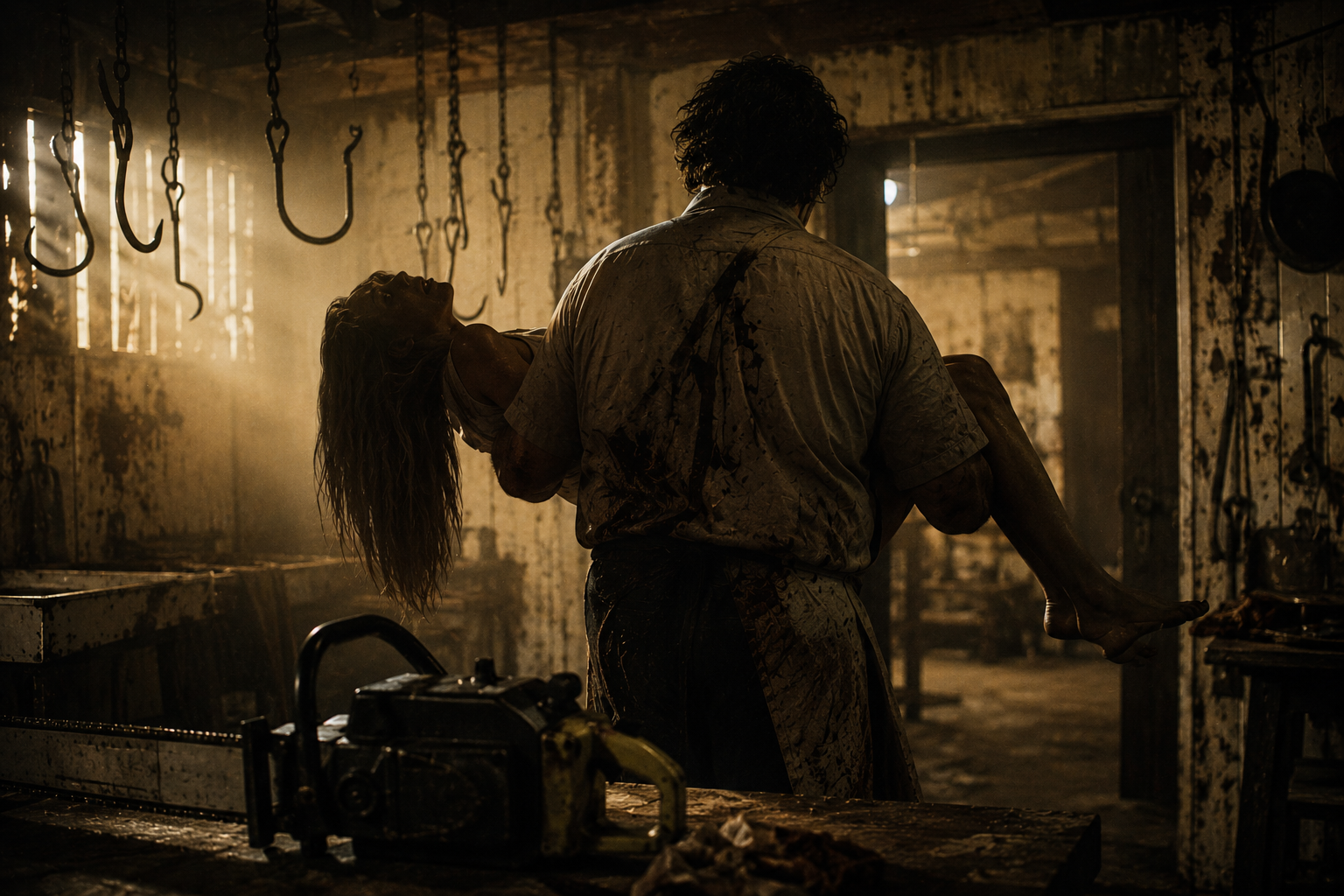
THE MEAT HOOK
And then we arrive at one of the most unforgettable moments in horror history:
The meat hook.
The scene is horrifying not because it is flashy, but because of how procedural it feels.
Most horror villains:
- stalk
- threaten
- perform violence theatrically
Leatherface simply grabs Pam, lifts her into the air, and hangs her on a meat hook like livestock entering a processing line.
No speech.
No rage.
No emotional performance.
Just workflow continuation.
And somehow, that coldness makes the scene far more disturbing.
Because Leatherface does not treat Pam like a person.
He treats her like material.
The horror comes from the industrial detachment of the act.
The family home no longer feels like a house.
It feels like infrastructure.
A slaughterhouse disguised as domestic space.
And then there is Leatherface’s energy in the scene, which becomes grotesquely funny once you step back far enough.
At this point in the film, random teenagers have entered his territory repeatedly like catastrophic workplace interruptions.
Leatherface hangs Pam on the hook with the exhausted energy of a man trying to finish a shift while teenagers keep spawning inside the processing facility.
Which is absurd.
And somehow makes the scene even more horrifying.
Because the violence feels normalized.
Routine.
Administrative.
And Pam’s reaction is equally brilliant.
For a split second, her nervous system understands the pain before her mind fully processes what has happened.
It is almost:
“Something hurts—”
followed immediately by:
“Oh my God. I’m hanging from a meat hook.”
That delay matters.
The body recognizes catastrophe before cognition catches up.
And then the scene introduces something even more terrifying:
Duration.
Pam does not die instantly.
She remains trapped in:
- pain
- helplessness
- inevitability
while Leatherface calmly resumes chainsaw operations.
That procedural indifference wounds the audience psychologically.
Because human beings instinctively expect violence to carry emotional weight.
Instead, the system continues operating.
Which is the central horror of the entire film.
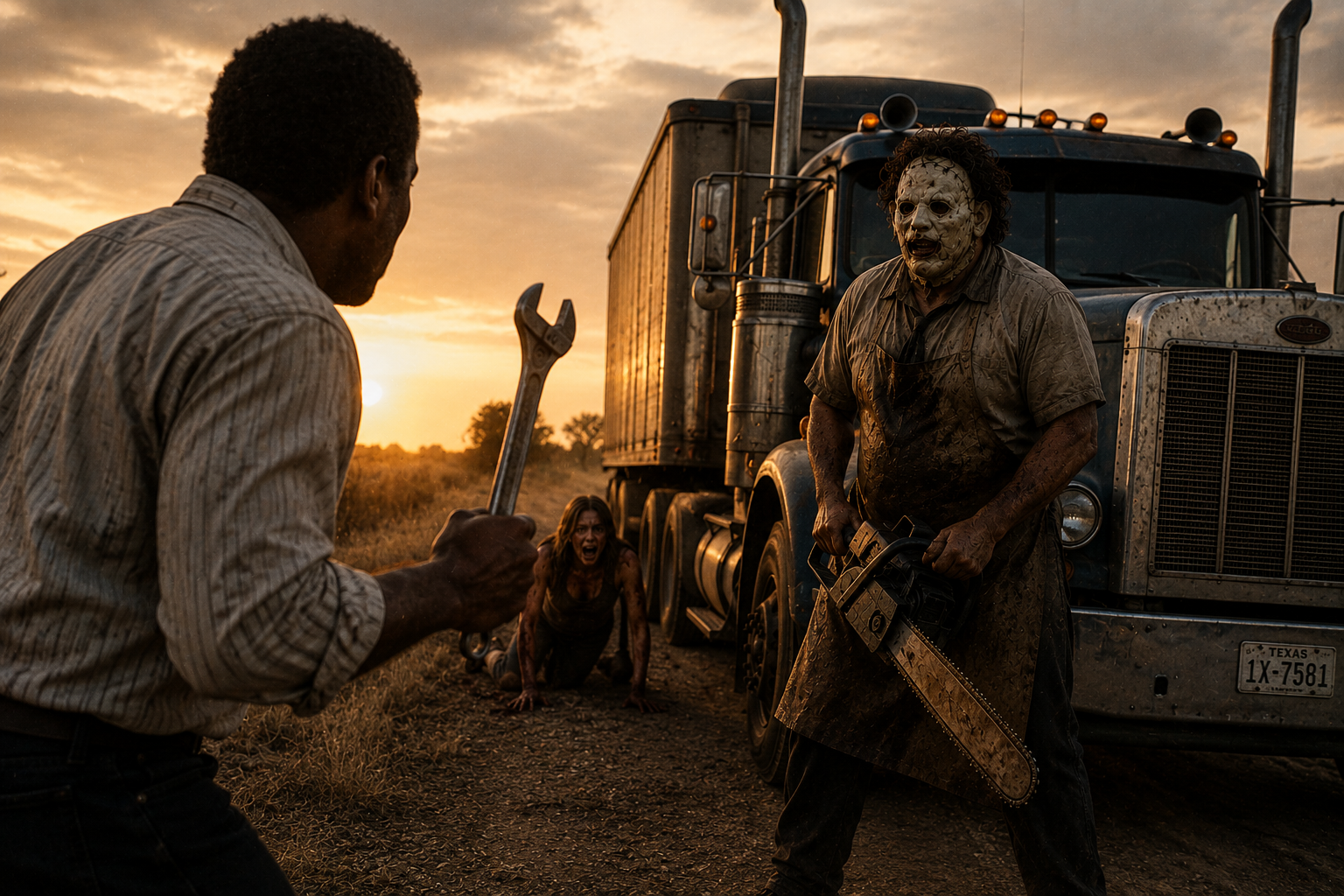
THE TRUCK DRIVER
And then we have perhaps the most realistic character in horror history:
The truck driver.
The poor man enters the scene believing he has encountered a roadside emergency.
Within seconds:
- a screaming blood-covered woman jumps into the road
- he realizes he hit someone with his truck
- Leatherface appears wearing another human being’s face
- a chainsaw slices Leatherface's leg
The truck driver immediately reaches the correct conclusion:
“Absolutely not.”
He throws a wrench.
Leatherface gets back up.
And the truck driver’s nervous system instantly transitions from:
“citizen assisting emergency”
to:
“survival protocol.”
Honestly?
Smartest character in the movie.
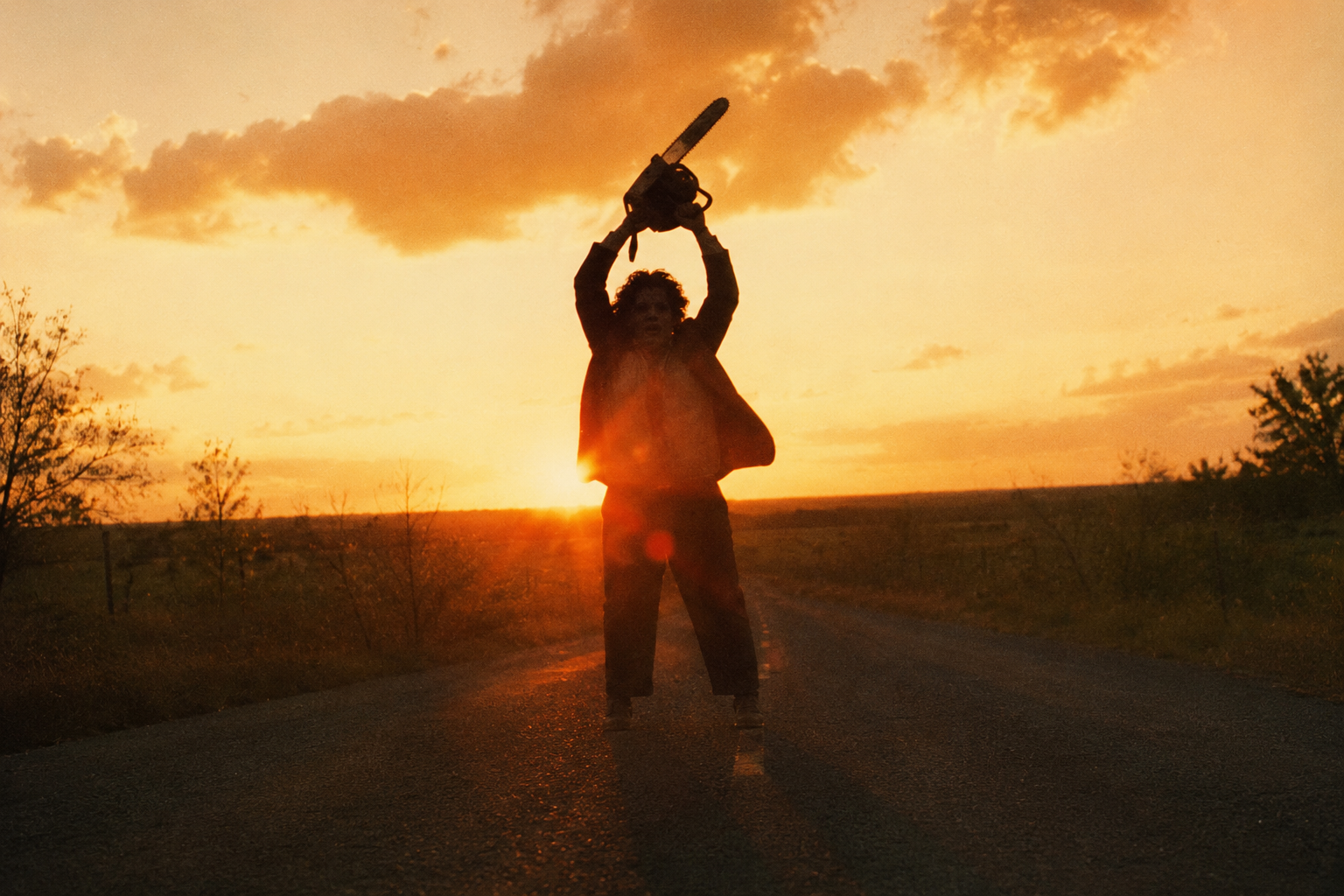
THE SUNRISE ENDING
The ending is iconic because it reveals the true nature of the horror.
Most horror films use sunrise as restoration.
Safety.
Reality returning.
The Texas Chain Saw Massacre uses sunrise as continuation.
Leatherface stands in the road swinging the chainsaw against the rising sun.
And the image is simultaneously:
- terrifying
- mythic
- absurd
- procedural
It almost feels like:
“Well. Another morning of chainsawing people.”
Which is funny.
And deeply horrifying.
Because the system continues.
Nobody defeats it.
Nobody understands it.
Sally survives temporarily.
But the nightmare itself remains operational.
That is why the final image burns itself into the audience’s mind.
The horror was never separate from reality.
The sun rises.
The chainsaw keeps moving.
And somewhere deep in the nervous system, the audience realizes something terrible:
The world may already contain structures capable of producing horrors like this.
The film simply removed the mask.
FINAL THESIS
The Texas Chain Saw Massacre is not terrifying because it shows us monsters.
It is terrifying because it reveals systems.
Industrial systems.
Family systems.
Violence normalized into procedure.
Reality transformed into processing.
The film wounds the audience psychologically because it activates a deeply human fear:
That beneath ordinary civilization, hidden structures already exist… waiting to continue operation after meaning collapses.
And perhaps the most terrifying realization of all:
The family may not be the anomaly.
They may simply be a visible node in a much larger architecture of violence—one that industrial society has already normalized, abstracted, and hidden from view.
Leatherface is horrifying not because he is unknowable, but because he feels functional. Procedural. Less a singular predator than an executing intelligence within a system that has already solved the moral problem of human consumption by removing morality from the process entirely.
This is why the film lingers.
Not because it asks, Could this happen?
But because it suggests a far darker question:
What if this is already happening—somewhere beyond perception—and what we encountered was merely an interface?